
College Music Audition Prep Online (USA)
For many US music programs the audition carries the application. Online one-to-one preparation can build the repertoire, reading and recording skills schools listen for.
By Dr Banerjee ·
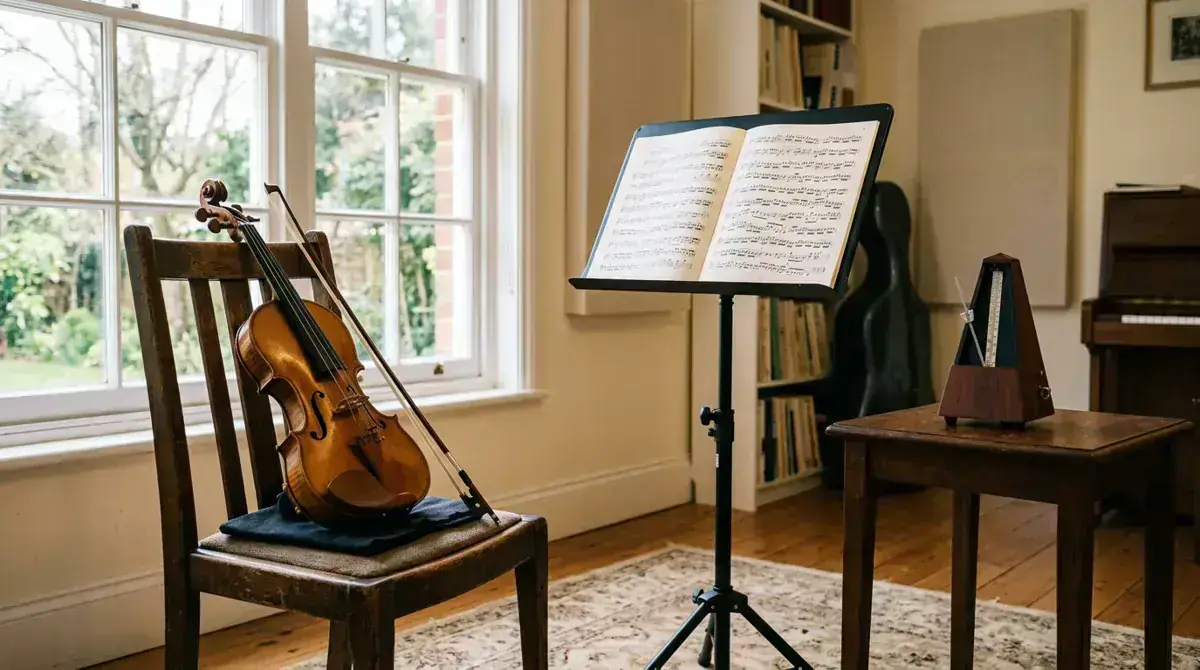
For many US music programs, the audition is the application — grades open the door, but the audition decides who walks through it. This college music audition prep online USA guide breaks preparation into the parts a student can actually control: choosing repertoire from each college's own requirements, building sight-reading and theory week by week, and recording a calm, honest audition at home.
What colleges actually listen for
Music admissions tutors are not only asking "can this student play?" They are asking "can this student be taught, and will they still be improving in year three?" That is why auditions usually combine prepared repertoire with something unprepared — sight-reading, scales, sometimes a short theory or aural exercise. A polished single piece with shaky reading behind it reads as a ceiling. Solid reading and musical, well-prepared repertoire reads as potential.
The weight of the audition varies. Performance degrees lean on it heavily; music education and composition programs may weigh portfolios, essays and academics alongside it. Either way, it is the one part of the application that is entirely a performance skill — and performance skills respond to coached practice.
Many schools now use a prescreen: a recorded first round that decides who is invited to audition live. Treat prescreen deadlines as the real ones, because they often fall weeks earlier than families expect. A student who discovers in November that a prescreen recording was due in October has no appeal against the calendar, so the schedule for preparation must be built backwards from the earliest date on the list, not forwards from today.
Three things, in this order: can you play or sing your program accurately and musically, is your technique sound enough to develop over four years, and do you read music and understand the theory behind what you play. Panels are usually generous about nerves and unforgiving about preparation, and they can hear the difference within the first thirty seconds.
What they are not listening for is difficulty. A clean, musical performance of a modest piece is worth far more than an ambitious piece played shakily, and auditioners say this every year to students who do not believe it.
Start with each college's requirements, not a generic list
Every college publishes its own audition requirements: how many pieces, which styles or periods, whether contrasting works are required, time limits, and whether the audition is live, recorded, or a recorded prescreen followed by a live round. Deadlines and rules change from year to year, so work only from each college's current official pages and write the dates into a calendar the week you decide to apply.
Build a small table: college, deadline, repertoire rules, format. Students aiming at several schools usually find that two or three well-chosen pieces can satisfy most lists if they are picked against the strictest requirements first.
Every program publishes its audition requirements: how many pieces, which styles, whether scales or sight-reading are included, whether there is an interview, and whether recorded auditions are accepted. Build a spreadsheet with one row per college and one column per requirement, because the differences between two programs are where students get caught out.
Then find the overlap. Most lists can be satisfied with three or four well-prepared pieces plus scales and sight-reading, and the overlap is what you prepare first. Pieces that only one college requires come later, and only if the list is short.
Repertoire, sight-reading and theory: the weekly work
Audition preparation divides into three habits. Repertoire comes first: choose pieces inside your current command that you can perform musically on an ordinary day, not only on your best one, and start them early enough that the final month is about interpretation rather than survival. Alongside it, sight-reading improves only one way — a little, daily, with material slightly below your level so fluency grows. Theory and aural skills run underneath both: naming intervals, hearing chord quality, and understanding the structure of what you play makes memorization steadier and mistakes recoverable.
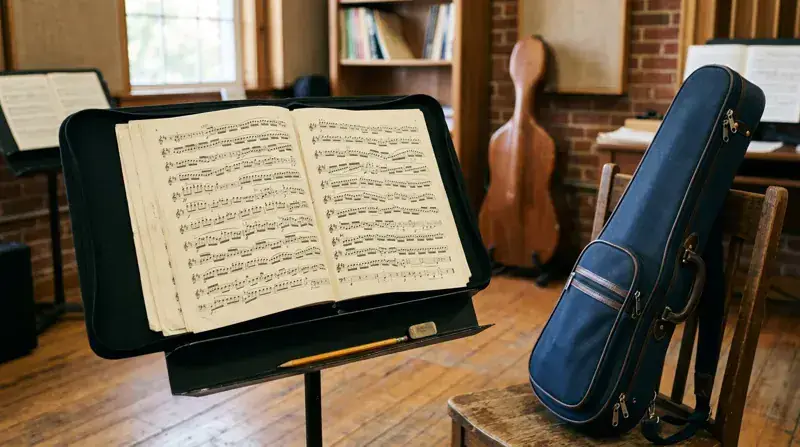
A teacher's real value here is sequencing and honesty: which piece to drop, which passage will crack under nerves, and when a work is ready to record. Mock auditions — playing the full program, in order, without stopping — should begin weeks before any deadline.
Practice sessions should mirror that pressure in small doses: run one movement without stopping each week, record it, and listen back the next day rather than in the heat of the moment. Nerves shrink when the format is familiar. By the final month, a student should have played the entire program start to finish several times — for the teacher, for family, for anyone willing to sit still — so that audition day feels like one more performance instead of a first one.
A workable week splits into technique and scales (daily, short), repertoire (four sessions), sight-reading (two or three short sessions with unfamiliar material), and theory or aural work (one session). The sight-reading is the part students skip and the part that most often decides a place, because it cannot be crammed.
For online preparation, the teacher needs to see and hear both: the camera for hand or embouchure position, the microphone for tone. Record one run of each piece every fortnight from the same position, so progress is audible rather than remembered.
Recording a strong audition at home
Recorded and prescreen auditions are now routine, and colleges listen for musicianship, not studio gloss. Follow each school's file and repertoire rules exactly, record complete takes rather than edited fragments where the rules require it, and film in a quiet, plainly lit room. Test microphone distance in advance: too close distorts, too far loses detail. Record several full takes on different days and choose the most musical one, not the most note-perfect.
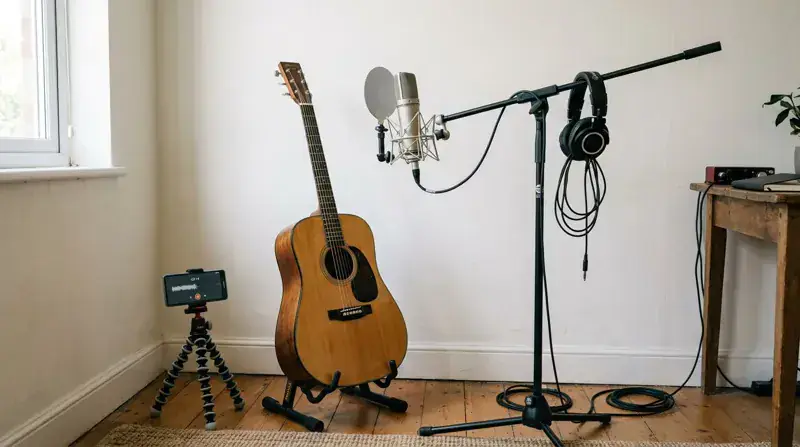
Use a room with soft furnishings, a phone or camera on a tripod at eye level, and a separate microphone if you have one. Record in one continuous take for each piece, because editing is usually forbidden or easily detectable. Two takes, chosen the same day, is a healthier process than thirty takes across a week.
Check the audio before the final take: no clipping on the loud passages, no air-conditioning hum, and a level where a quiet phrase is still audible. Most rejections of otherwise good recordings are technical rather than musical.
Preparing online with Dr Banerjee
Dr Banerjee prepares singers, pianists and guitarists one-to-one online: repertoire coaching, the technique underneath it, sight-reading and theory built into weekly lessons, mock auditions, and practical guidance on recording at home. Because lessons are one-to-one, the plan is built around your target colleges' actual requirements — bring your table of deadlines and repertoire rules to your first session.
That first session is a free introductory session of 15 to 30 minutes, one-to-one over video, before enrollment and before payment: use it to map your audition timeline honestly. Monthly one-to-one plans are $48 for 4 classes, $86.40 for 8 classes or $122.40 for 12 classes, each class 45 minutes to one hour; times are agreed together, subject to available slots. See our fees, how the free introductory session works, or contact us on WhatsApp at +91 62800 75157 or at drbnrj@gmail.com.
Online preparation works well for audition repertoire because the work is repetitive and corrective: a phrase is played, heard, corrected, played again. A recording of each lesson means the corrections are available all week, which is exactly what a pre-audition student needs between sessions.
Bring the college list and the deadlines to the first session. The plan should be built backwards from the earliest audition date, with the repertoire finished four weeks before it and the last month spent on performance and recording rather than on learning notes.
Build an audition calendar backward from the deadline
A calendar turns an application deadline into manageable checkpoints. Work backward from the earliest due date, allowing time for repertoire, feedback, recording or travel plans, and any required materials. Check each school’s official instructions because submission formats and audition dates can differ.
- Record each school’s deadline and required audition format.
- Schedule a first full run-through before the final week.
- Leave a separate day to check uploads, forms, and accompaniment needs.
Write the deadline, then subtract: four weeks for performance polish, two weeks for recording and technical checks, eight weeks for repertoire, and however long is left for technique. If that leaves fewer than eight weeks for the pieces, the repertoire is too ambitious for the time available.
Put the mock auditions in the calendar at the same time as the deadlines. A student who has played their program to three different listeners before the real panel is nervous in a different, more useful way.
Practice a mock audition without adding extra repertoire
A realistic run-through helps a student test transitions, focus, and recovery after a mistake. Use only the required pieces and follow the order listed by the school. Afterward, write down one adjustment rather than immediately adding another piece to an already full schedule.
- Perform the set in the required order without stopping.
- Ask a trusted listener to note clarity and pacing.
- Practice restarting calmly from a marked point in each selection.
Related: singing lessons, guitar lessons and piano and keyboard lessons.
Frequently asked questions
When should a student begin audition preparation?
Start early enough to learn each school’s specific requirements, prepare repertoire, and schedule feedback before application deadlines. The right timeline depends on the program and the student’s current level, so build a calendar from the official dates rather than relying on a single general rule.
Should every audition piece be fully memorized?
Follow each school’s instructions first; requirements vary by program and instrument. If memorization is requested, plan gradual recall checks instead of waiting until the final week. If it is not required, focus on musical security, transitions, and the ability to recover calmly after a small mistake.
Can online lessons help with audition preparation?
Online lessons can provide focused feedback on repertoire, rhythm, and preparation routines when the camera and sound are clear. Ask how the teacher will review the required material and whether the student should arrange a separate recording or accompaniment check for the specific program.
Next step
Use the official audition brief to shape each preparation step. Compare current lesson options on the fees page, or use the free introductory session to discuss repertoire and timing.