
Online Piano Lessons for Kids in the USA: Parent Guide
A parent-first guide to setup, lesson focus and practice rhythm for a child learning piano online at home.
By Dr Banerjee ·
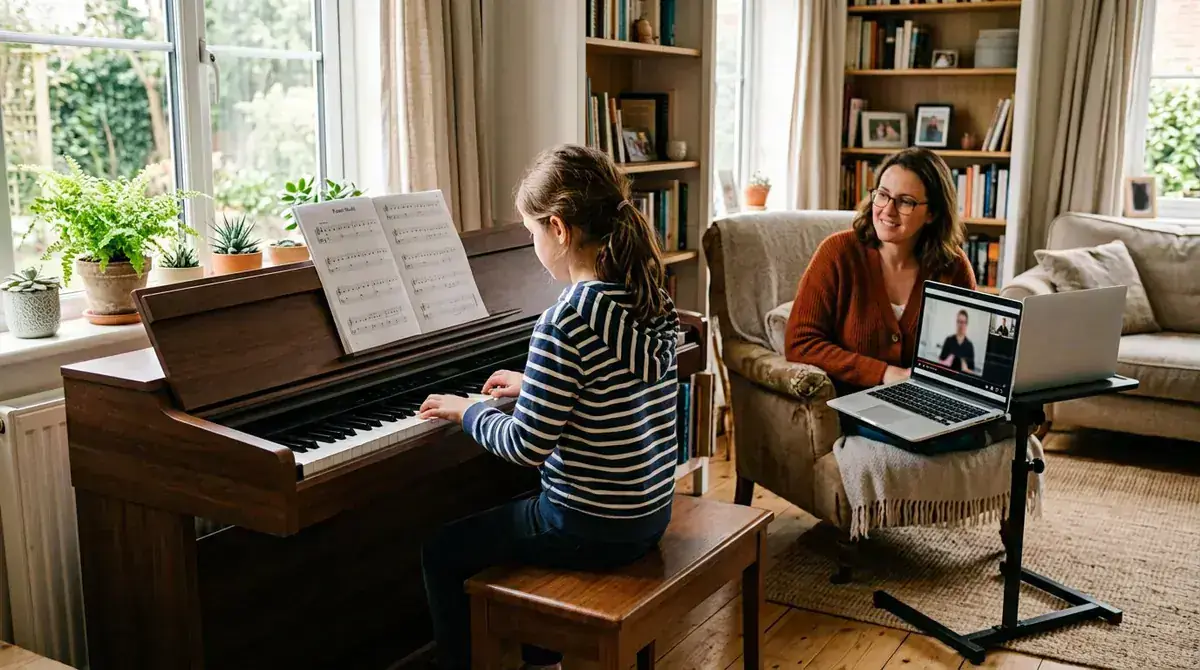
Set up the camera and keyboard before the lesson
Place the camera far enough back to show the child’s hands, the keyboard and the bench. A teacher can give clearer feedback when both the student’s posture and the keys are visible. A tablet or laptop on a stable surface is usually more useful than a phone held in someone’s hand.
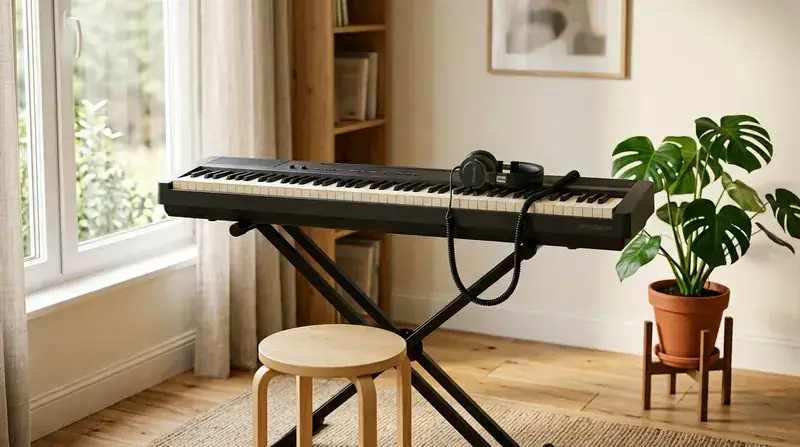
Check the bench height and let the child’s feet rest securely. Keep the keyboard at a comfortable reach, remove toys from the immediate playing area, and put a pencil and notebook nearby. There is no need to buy studio equipment before a first conversation about the child’s goals.
Do the setup once, then photograph the result and keep the photograph. Every lesson then starts with the same three checks: the hands and keys are visible, the sound is going to the teacher rather than the room, and the child can reach the pedals if the piece needs them.
Headphones for the child and speakers for the room is usually the wrong way round; the child should hear the instrument through headphones while the microphone picks up the acoustic sound, or the teacher hears nothing but the digital output and loses the sense of touch.
Make practice short, specific and repeatable
For a young beginner, a short focused practice block is often more workable than an ambitious session that competes with homework and bedtime. Agree on one small task from the lesson: a hand shape, a rhythm, or a short passage. End by playing something the child already enjoys.
Parents can help by protecting a regular time and noticing effort, not by correcting every note. If the child is tired, a few careful repetitions may be more useful than pushing through a long checklist. The teacher can help adjust the plan to the student’s age and attention.
Ten minutes, one task, written down. The task should be small enough that the child can succeed at it four times out of five, because a beginner's practice is about repetition of something already nearly right. If the child gets it wrong four times out of five, the task is too big and the teacher needs to know.
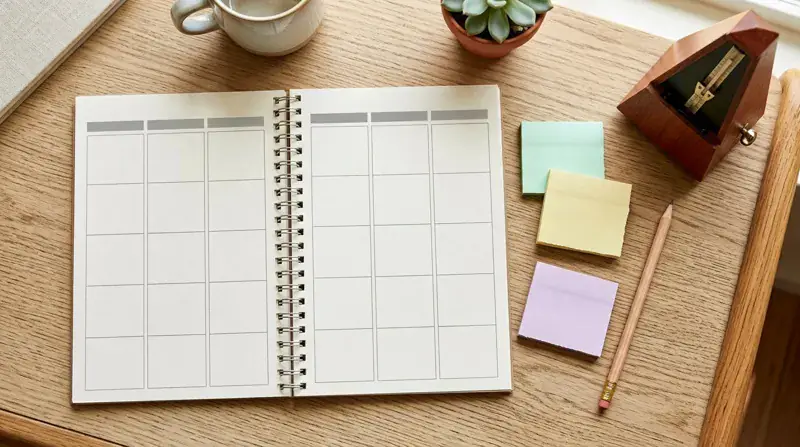
Keep a small notebook next to the piano with the week's task and a tally per session. Children respond well to a visible count and badly to a vague instruction to practice more.
Ask how progress and feedback are handled
Before enrolling, ask what a typical lesson covers, how practice instructions are shared, and how the teacher will respond if a child gets stuck. A clear explanation matters more than a list of promised milestones; learning pace differs from one student to another.
Use the free one-to-one introductory session to discuss the child’s experience, the instrument at home and what the family hopes to learn. You can then compare the monthly options on the fees page without committing to a regular class.
Ask what happens if a week is missed, how the teacher decides when a piece is finished, and whether there is anything to prepare before a lesson. Ask, too, what the child will be able to play in three months, in specific pieces rather than in levels.
A teacher who answers these in concrete terms is planning a route; one who answers in generalities is improvising. Both can teach well, but only the first can tell you at any point whether the lessons are working.
Use a two-minute pre-lesson checklist
A predictable setup gives a child more lesson time for music. Before the call, check that the piano or keyboard is within reach, the camera can show the keys and the child’s hands, and a notebook is nearby. A parent can handle the technology so the student can focus on listening.
- Place the device far enough away to show both hands and enough of the keyboard.
- Mute nearby televisions and silence message alerts.
- Keep water and a pencil close, then let the child lead the first musical question.
Instrument on and at the right height, camera showing hands, headphones or speakers set, water within reach, the week's notebook open. Two minutes, done by the child once it is routine, and it removes the four most common reasons a lesson starts late.
For a younger child, a picture of the correct setup taped inside the piano lid does the job better than a verbal reminder, and it gives the child ownership of something in the lesson rather than making it a parent's task.
Watch for these common online-piano mistakes
A camera aimed only at a face makes hand position difficult to see; a camera aimed only at the keys can make conversation feel distant. Adjust the angle together at the start. Avoid turning practice into a long correction session: one carefully repeated phrase is a better target than playing the whole page inaccurately.
- Change the camera angle when the teacher asks, rather than buying a special mount first.
- If a child is frustrated, return to a familiar song and finish on a success.
- Tell the teacher when homework, sports, or screen fatigue changes the routine.
The three recurring ones: a keyboard so low that the child's wrists drop below the keys, a camera angle that hides the right hand, and a child who plays only when the teacher asks and never between lessons. The first two are setup problems and take minutes; the third is a practice-design problem and takes a conversation.
A fourth is subtler: a child who has learned to play the piece while watching the screen rather than the music. Point the camera slightly higher and ask the child to look at the page, or the habit will need undoing later.
Notice progress beyond finishing a page
A completed page is only one sign of learning. Listen for an even pulse, a relaxed hand, or a cleaner start after a pause. A parent can note one change each week and share it with the teacher, without turning practice into a daily test. Those small observations help choose the next lesson task.
- Record the same short phrase once a week for the student’s own comparison.
- Notice one musical change, such as steadier rhythm or clearer articulation.
- Ask the child which part felt easier, then share that answer with the teacher.
Progress in a child's piano playing shows up in things a page cannot record: a chord changing cleanly without looking down, a piece played at a steady tempo, a wrong note noticed and corrected without being told. Ask the teacher to name these when they happen, and repeat them to the child.
A child who only hears about pages finished learns that music is a syllabus. A child who hears what specifically got better learns that music is a skill, and that is the belief that survives the first difficult piece.
Turn a difficult passage into a repeatable loop
When a passage feels too hard, shrink it instead of repeating the whole piece. Choose two measures, slow the tempo, and identify the exact movement that causes a pause. Once that small piece feels predictable, reconnect it to the measure before and after. This gives practice a clear stopping point.
- Mark the two measures that need attention.
- Repeat slowly until the notes and hand movement feel controlled.
- Join the passage to its neighbors, then return to the full piece.
Related: piano and keyboard lessons.
Frequently asked questions
What should a child have ready for an online piano lesson?
A working keyboard or piano, a stable device, a quiet corner, and a way to see the keys are enough to begin. Ask the teacher whether a notebook or headphones would help for the child’s setup. A quick setup check with the teacher can confirm what suits your room, instrument, and device.
How can a parent help without taking over?
Set up the room and protect a short practice time, then let the child answer questions and try the music. Share practical observations with the teacher, but avoid correcting every note between lessons. Encouragement works best when the child still owns the musical choices and tries the next step.
Should we buy a full-size piano first?
Not automatically. Discuss the child’s goals, available space, and current instrument before buying. A suitable keyboard can be enough to explore a first lesson; the teacher can explain what features matter for the next step. Ask about access and practice needs before committing to an expensive instrument or extra equipment.
Ready to explore lessons?
Compare the monthly fees and plans or learn what happens in the free introductory session.