
Harmonium or Keyboard? A Beginner’s Comparison Guide
Compare the sound, playing feel and practical setup of a harmonium and keyboard before choosing a first instrument for online lessons.
By Dr Banerjee ·
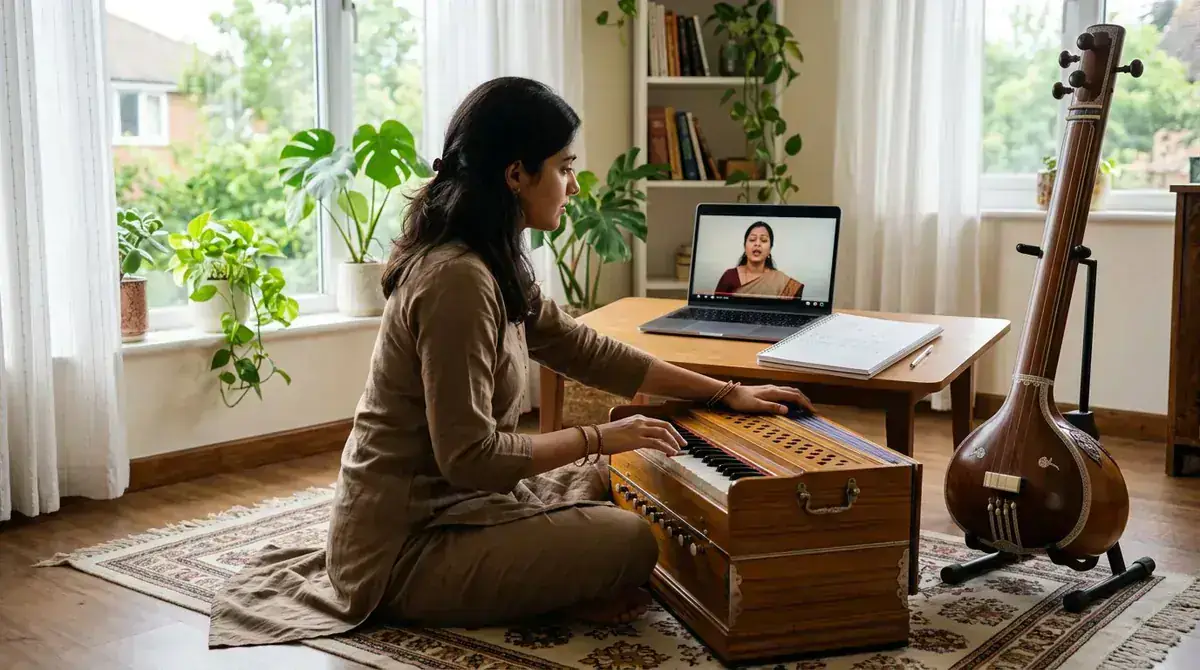
Start with the sound and repertoire you want
Harmonium or keyboard for beginners is not a one-size-fits-all choice. A harmonium makes sound through air moved by bellows and is often used to support Indian vocal music. An electronic keyboard produces its sound electronically and can offer a range of instrument voices. Think first about what you want to play and hear.
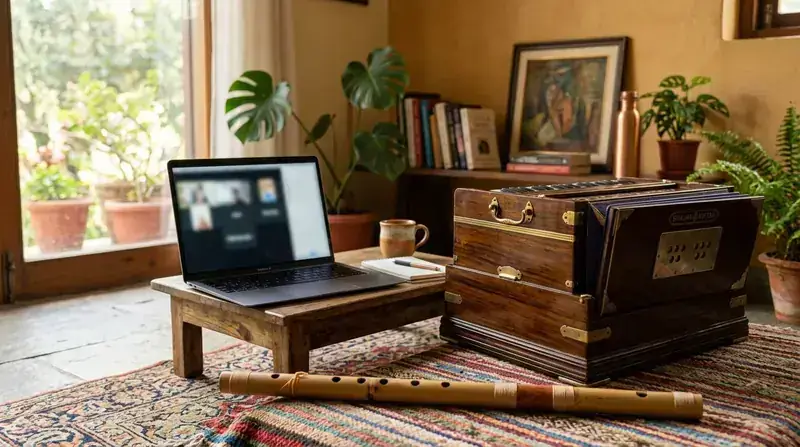
If your main interest is Indian vocal repertoire, discuss how the harmonium may support listening and accompaniment. If you want piano-style technique or different sounds, a keyboard may be a better fit. The teacher can help you understand what a specific instrument will and will not do.
If the music in your head is a bhajan, a ghazal or a film song with a melodic line, the harmonium is the instrument that produces that sound with almost no technique: press a key and the reed sings, with no bowing, no embouchure, no breath. If what you want is chord accompaniment, arranging, or playing pop songs by ear, the keyboard's polyphony and its range of sounds make it the faster route.
Write down three pieces you want to play in the first six months. If two of them are kirtan or film songs with a vocal line, the harmonium is the honest answer; if two of them need both hands doing different things at once, the keyboard is.
Compare size, volume and maintenance
A harmonium needs space for the instrument and room to move the bellows; an electronic keyboard needs power and a stable stand or table. Both require safe storage and a comfortable position. Consider household noise, transport and how much room the instrument will take when it is not in use.
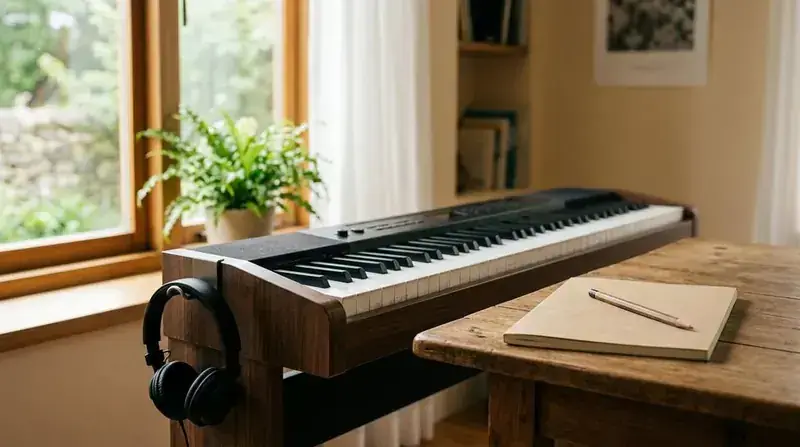
Before buying, check the instrument’s condition, range and return policy with a qualified seller. A photo cannot show everything about how a used instrument feels or sounds. Ask the teacher which features matter for the student’s immediate goals, and avoid paying extra for features you do not need.
A harmonium is mechanical: bellows, reeds, and a wooden case that dislikes damp and heat. It needs a dry room, occasional tuning by a technician if a reed drifts, and it is loud in a way that carries through walls. A keyboard needs power or batteries, headphones, and nothing else — which is why it is often the better instrument in an apartment where practice has to be quiet at nine at night.
Weigh the instrument you will actually use. A harmonium that lives in a cupboard because the neighbors can hear it teaches nobody anything, and a keyboard that lives under a desk because it needs three cables has the same problem. Buy for the room you practice in, not for the room you wish you had.
Choose a lesson plan after you choose a direction
The introductory session can help connect an instrument choice to a clear learning goal. You can discuss prior experience, available space and what a camera needs to show. If you already own one of the instruments, begin by asking how to make that setup work.
Once you know which subject you want to study, compare the monthly class options on the fees page. The lesson plan is separate from the cost of purchasing or maintaining an instrument.
Compare sound and physical setup before choosing
A keyboard offers piano-style keys and several built-in sounds, while a harmonium uses bellows and a reed-based tone that suits many Indian vocal traditions. Compare the instrument you want to hear with the space, portability, and practice conditions available at home.
- Listen to examples of the songs or style you hope to study.
- Check how much room the instrument needs and whether it can stay ready to play.
- Consider noise, headphones, carrying, and storage before buying.
Let the music you want to learn guide the decision
A beginner can choose from musical curiosity rather than assumptions about difficulty. If you want to accompany devotional or classical singing, ask how harmonium may support that goal. If you want piano repertoire or broad keyboard sounds, discuss an electronic keyboard. The teacher can help compare real examples.
- Bring two songs you enjoy to the introductory conversation.
- Ask what the first month would involve on each instrument.
- Choose the option you can access regularly, not the one with the longest feature list.
The repertoire question is also a teaching question. Indian classical and devotional material is taught through melodic phrases, ornaments and raga structure, with the harmonium supplying a continuous line and often accompanying a voice. Western material is taught through chords, voicing and hand independence. A teacher who is strong in one can usually start you in the other, but the first six months will feel different.
Ask what the first month's material would be for each instrument, in specific pieces, and choose the answer you would be happy to practice. That single question resolves the instrument choice more reliably than any comparison of specifications.
Try the first lesson task on each instrument
A sound sample is useful, but trying a simple musical task can make the comparison more concrete. Ask how a beginner would start a short melody on harmonium and on keyboard, then consider which process matches your interest. This helps compare real learning rather than features alone.
- Choose a short melody you recognize.
- Ask what hand movement and setup each instrument requires.
- Notice which sound and activity you want to repeat at home.
The test task is simple: play and hold a five-note phrase, then repeat it while singing it. On a harmonium, the bellows have to be kept moving while the fingers work, and you will notice within a minute whether that coordination suits you. On a keyboard, the same phrase will be easy, which tells you the real difficulty lies elsewhere — in chords and hand independence.
Do this in a shop if you can, or in the first lesson with the instrument on camera. Whichever task feels like play rather than struggle is the instrument to start with, and the other remains available later: many students end up with both, using the harmonium for devotional material and the keyboard for everything else.
Compare the full setup, not only the purchase price
The instrument is part of a home routine: it needs room, a stable place to play, and a way to practice without distraction. Think about storage, portability, and the music you want to study. A teacher can help identify a suitable starting setup before you shop.
- Measure the available practice space.
- Consider whether the instrument can stay accessible between lessons.
- Ask which basic features support your first musical goal.
Related: Harmonium lessons and Piano and keyboard lessons.
Frequently asked questions
Is harmonium easier than keyboard for a beginner?
Ease depends on the music and the student. Harmonium adds bellows coordination; keyboard has a different touch and repertoire. A teacher can demonstrate the starting tasks for both and help you decide what fits your interests. A short demonstration can make the difference easier to hear than a feature list.
Can I learn both harmonium and keyboard?
You can explore both, but beginners often benefit from choosing one main instrument at first. A focused routine builds familiarity; later, related skills can support a second instrument. Keep the first choice focused and ask the teacher which skills transfer between instruments.
Which instrument should I buy first in the USA?
Choose based on the music you want to play, available space, and a comfortable instrument you can access consistently. Ask the teacher before ordering so you can avoid features or costs that do not support your current goal. Compare the options with your actual songs and home setup before making a decision.
Ready to explore lessons?
Compare the monthly fees and plans or learn what happens in the free introductory session.