
A Music Practice Routine for Kids: A Parent’s Guide
Help a child practice without turning music into a daily argument: make the task clear, brief and easy to begin.
By Dr Banerjee ·
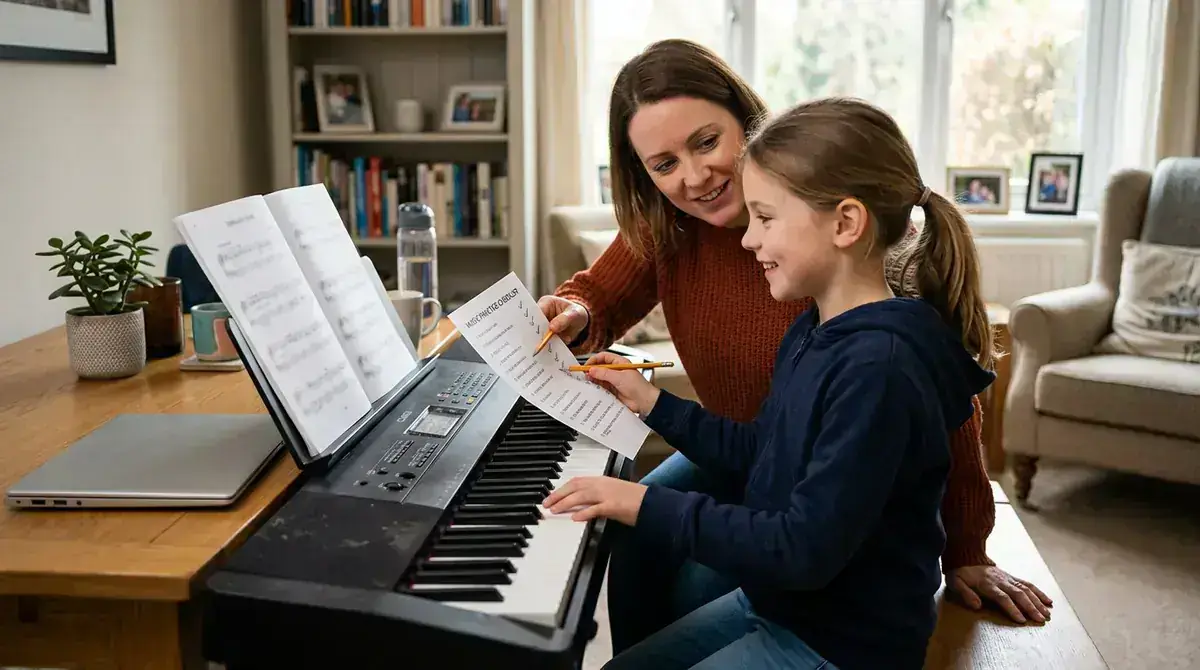
Choose one small task before the child sits down
A music practice routine for kids starts with a clear instruction: repeat a short phrase, clap a rhythm, or play a passage slowly. “Practice your instrument” is too broad for many beginners. Ask the teacher to help define what a successful few minutes looks and sounds like for this student.
Keep the task visible on a note or checklist, but do not turn the list into a scorecard. The aim is to make starting easier and help the child notice one improvement, such as smoother fingering or a steadier beat.
One task means one measurable thing: the change from G to C, the four bars the child keeps rushing, the first line of the song. Written on a sticky note and stuck to the music stand, it removes the question that eats a practice session, which is not "how do I play this" but "what am I supposed to do right now". A child who has to decide is a child who will negotiate.
Parents sometimes worry that a single task is too little for a week. It is not: the same task played six days in a row is how the hands learn it, and the teacher can hear the difference in four days. A child who arrives at the lesson having nailed one small thing arrives confident, which is worth more than a child who half-learned five things.
Make the instrument easy to reach
If it is safe and practical, keep the instrument and music in a consistent place. A keyboard can stay on its stand; a guitar can be placed securely where an adult can supervise. Gather a pencil, music and any needed accessories before the session begins.
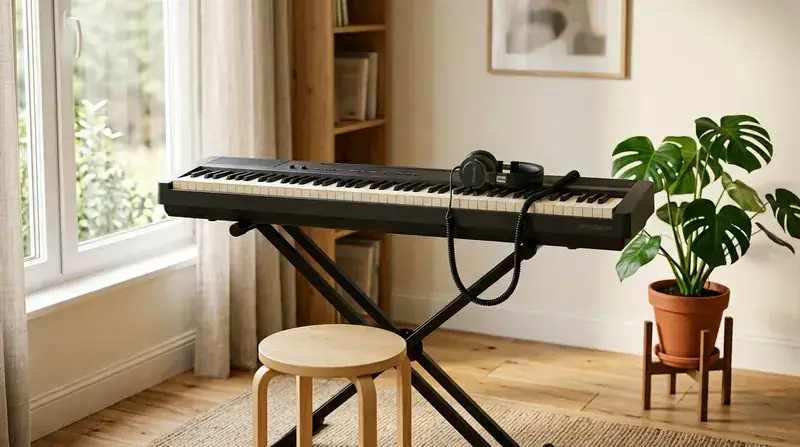
For a child who shares a room, use a predictable time and a small practice corner. Parents can help with setup, then give the student room to try the task. Encouragement works better when it notices effort and focus rather than comparing the child with siblings or recordings.
Practically, that means a stand in the room where the family already sits, not a case in a cupboard upstairs. A guitar on a stand with the cable already plugged in, a keyboard left switched on with the headphones hanging on the corner, a ukulele on a hook at child height. If setting up takes more than thirty seconds, the routine will not survive a tired Tuesday.
Keep the printed material with the instrument — one folder, one pencil, nothing else in it. A child who has to find the book loses two minutes and most of the motivation. The aim is that practice can begin mid-sentence, without anyone having to organize anything first.
Adjust the routine when the week changes
A routine should serve the family, not become another source of stress. If homework, illness or travel disrupts the usual time, resume with a manageable task when the week settles. Tell the teacher which practice instructions felt clear and which were hard to complete.
Regular lessons can help set the next small goal. Families can try the free one-to-one introductory session to discuss the child’s interests and routine, then review monthly plans on the fees page.
Use a three-part practice block
A simple routine can help a child know what to do without making practice feel like a test. Begin with a familiar warm-up, work on one small lesson task, and finish by playing a song the child likes. Keep the block short enough to fit the household’s real schedule.
- Start with a familiar sound or rhythm for confidence.
- Repeat one assigned skill slowly and carefully.
- Finish with a favorite song and note one question for the next lesson.
For a young beginner, ten minutes splits cleanly: three on the task, four on a piece they already enjoy, three on something playful — echoing a rhythm, finding a note by ear, improvising over two chords. The playful part is not a reward bolted on the end; it is where the ear develops, and it is the part children talk about on the way home.
If the child is older, stretch it to fifteen or twenty minutes with the same shape but longer sections, and let them choose the playful part. A student who chooses the ending of their own practice session is much more likely to start the next one without being asked.
Track effort without turning it into a test
A calendar mark can show consistency, but it should not become a score of a child’s talent. Notice useful actions: starting on time, trying a tricky passage, or asking for help. If practice repeatedly becomes stressful, tell the teacher so the plan can be adjusted.
- Praise the process rather than demanding a perfect performance.
- Use a visible checklist with only one or two tasks.
- Keep a missed day neutral; return to the routine at the next opportunity.
A simple tally on the fridge — one mark per session, no minutes, no grades — is enough. It gives the child a visible record and gives the parent early warning that a routine is slipping, without either of them needing to discuss it as a problem. The rule is that the tally never becomes a target to beat; the moment it does, the child starts practicing for the marks.
Review the tally once a week, briefly, and change one thing if it has been thin. Usually the fix is smaller than parents expect: moving practice from after dinner to before school, or shortening sessions by five minutes so they stop being resisted.
Make a backup routine for busy school weeks
A family routine can change with homework, sports, or travel. Instead of abandoning practice when the usual time disappears, choose a shorter backup task that preserves contact with the instrument. Let the teacher know when the schedule shifts so lesson assignments remain realistic.
- Pick a brief task that can fit into a busy day.
- Keep the instrument and notebook easy to reach.
- Resume the regular routine when the family schedule settles.
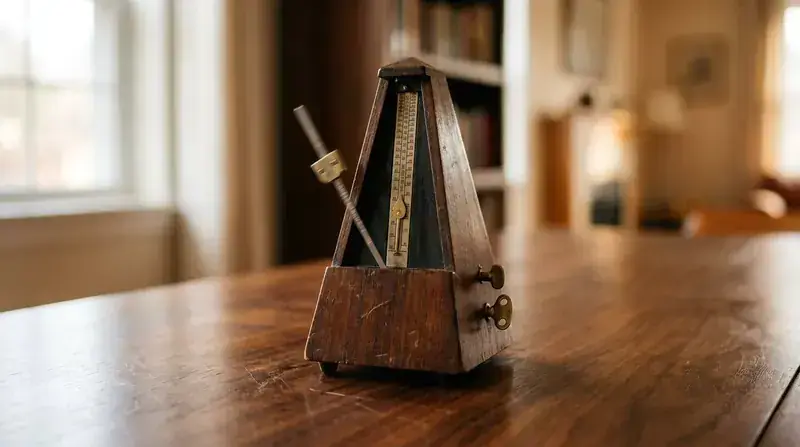
Name the backup in advance, while nothing is wrong. On a heavy week the routine becomes five minutes: one scale, one task, done. No new material, no catching up, no discussion about whether it counts. Having decided this in October means nobody has to negotiate it during the week of the school concert and the science project.
The day after the busy week ends, return to the normal length immediately rather than working back up to it. Children recover routine faster than adults and will usually accept the normal session without comment if it starts the same way it always did.
Use the lesson notes to choose what to repeat
A child may not remember which detail the teacher asked them to practice. A short written note or simple symbol can make the next session clearer. Keep directions specific and limited; several new tasks at once can make a young learner unsure where to begin.
- Write one or two tasks immediately after the lesson.
- Ask the child to explain the task in their own words.
- Bring back any unclear instruction for the teacher to clarify.
Related: Lessons for children and Beginner music lessons.
Frequently asked questions
How long should a child practice music each day?
The right amount depends on the child’s age, instrument, and current lesson task. Ask the teacher for a realistic target, then adjust if school, fatigue, or frustration makes the routine difficult to maintain. Use a simple timer if helpful, but stop when attention or comfort begins to fade.
What should parents do when a child avoids practice?
Ask what feels hard and reduce the task to one small action. A parent can protect the time and encourage a start, while the teacher can help change an exercise that is too difficult or unclear. A calm conversation can reveal whether the task, timing, or instrument setup needs adjustment.
Should practice be scheduled at the same time every day?
A regular time can make practice easier to remember, but a family schedule may vary. Choose a dependable window on lesson days and keep a flexible backup rather than turning a missed slot into a conflict. The teacher can help reset expectations so practice supports learning rather than pressure.
Ready to explore lessons?
Compare the monthly fees and plans or learn what happens in the free introductory session.