
MTNA Find-a-Teacher: How to Verify an Online Music Teacher
A directory listing is a starting point, not a guarantee. Here is how to use MTNA's Find-a-Teacher, then verify an online teacher's credentials, policies and fit before any money changes hands.
By Dr Banerjee ·
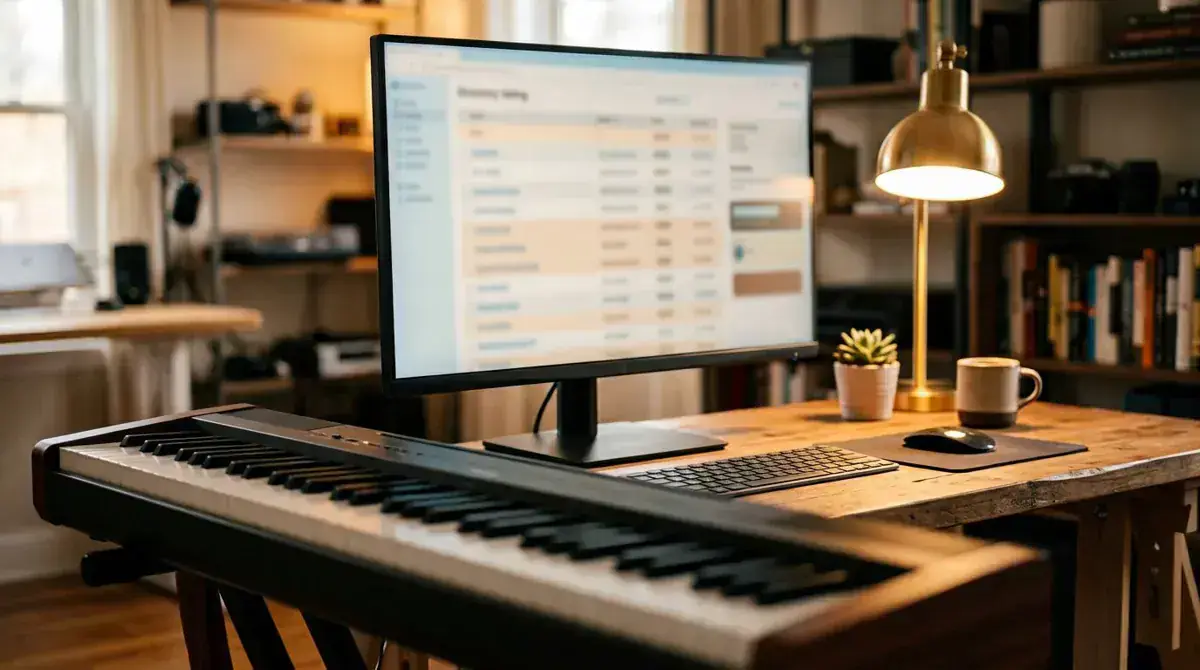
A directory listing is a starting point, not a guarantee. Think of this page as an MTNA Find-a-Teacher verify online music teacher USA routine in two halves: first use the directory to find promising candidates, then check credentials, policies and fit properly before any money changes hands. The second half takes half an hour and protects every month that follows it.
What MTNA Find-a-Teacher is
The Music Teachers National Association, known as MTNA, is a long-established US association of independent music teachers, and its website at mtna.org includes a Find-a-Teacher directory. You can search by instrument and location and get a list of member teachers with their contact details and, in many cases, a short profile.
That list is genuinely useful, especially if you want a teacher in a specific town. But a listing tells you a teacher is a member who teaches your instrument. It does not tell you whether they teach well online, what they charge, or how they handle a missed lesson — which is why verification is your job, not the directory's.
The Music Teachers National Association runs a public directory where member teachers can list their studio, instruments, location and, in many cases, whether they teach online. It is one of the larger directories in the USA and it is free to search, which makes it a sensible first stop when you have no local recommendations.
The directory is a listing service, not a rating service. Being in it means the teacher is an MTNA member, which requires dues and, for some membership categories, professional evidence. It says nothing about how many students they retain or how well they teach.
How to search the directory well
Start with the instrument and the broadest location you would accept, then widen or narrow from the results. For in-person lessons, distance decides everything. For online lessons, location matters far less, so widen the net: a strong teacher three states away who teaches by video every week may serve you better than a nearer teacher who treats online lessons as an afterthought.
Build a shortlist of three or four names rather than falling for the first profile. For each one, note what they teach, who they teach (children, adults, beginners, advanced students), and whether their profile mentions online lessons at all.
Search by instrument and by state, then filter for teachers who explicitly list online lessons — many listings still say "in studio only". Use the distance filter generously if you are willing to travel, and read the whole listing rather than the first three results, because listings are ordered by nothing in particular.
Make a shortlist of five and look at each teacher's own website. The directory gives you a name and a location; the website tells you what they actually teach, what they charge and whether they have a policy page. A teacher without any web presence is not disqualified, but you will need to ask more questions.
Verify credentials before you enroll
Credentials means the things you can check, not the things you are told in a friendly chat. Ask where the teacher trained and how long they have taught. Look for consistency: does their own website tell the same story as the directory profile? Do they name age groups and levels they actually teach, or promise everything to everyone?
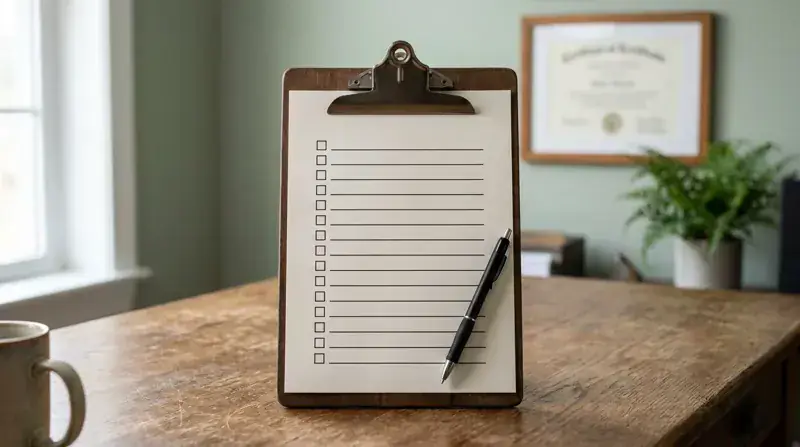
Keep the same short checklist for every candidate: training, years of teaching, instruments and levels taught, experience with students like you or your child, and professional memberships. Write the answers down side by side. Vague answers are information too.
Watch for two common warning signs. The first is a profile full of superlatives with nothing checkable behind it: no training history, no named levels, no specifics about how lessons actually run. The second is pressure to commit, such as long prepaid packages offered before you have met the teacher, or discounts that expire before your first session. A confident teacher expects your questions and answers them in writing. And if association membership matters to you, confirm the listing matches the teacher's full name, because profiles are sometimes out of date or written loosely.
When a listing says "NCTM" or names a degree, check it. NCTM is a certification with a verification process through MTNA, and degrees can be verified with the institution. A short email to the association asking whether a teacher holds current certification is normal practice and will get a straight answer.
Verify the degree subject as well as the institution. A bachelor's in music education is a different qualification from a performance degree, and both are different from a certificate from a short course. None of this is about gatekeeping; it is about knowing what you are paying for.
The questions that matter for online lessons
Online teaching is its own skill, so ask online-specific questions. Which video platform do they use, and can the camera show their hands and instrument clearly? What happens if the call fails mid-lesson? What is the cancellation and rescheduling policy — get it in writing, because this single policy causes more parent-teacher friction than any other. How does payment work, and when is it due?

Finally, ask the question that filters out most bad fits at zero cost: can we have a free introductory session before paid enrollment? A teacher who will not meet you for twenty minutes before taking your money is telling you something.
Use that introductory meeting as a test of the whole arrangement, not just the personality. Check that the sound is clear enough to hear dynamics, that you can see the teacher's hands or instrument when it matters, and that the teacher explains one small thing in a way you or your child genuinely understands. Ask how practice between lessons is set and how progress is reviewed. If the teacher listens more than they sell, you have probably found a good fit.
Ask what platform they use, how they handle a dropped connection, whether lessons are recorded, and what camera and microphone setup they expect from you. Ask how they teach technique remotely, and whether they have taught beginners online before or only moved existing students online during the pandemic.
Ask, too, what happens about time zones if you are not in the same one. A teacher who has taught online for years will answer all of this without hesitating, and their answers will be specific.
Run the same checks on us
Whoever you choose — including us — should pass the same checklist. Dr Banerjee teaches one-to-one online lessons in piano and keyboard, singing, guitar, harmonium and Indian classical vocal, and we are glad for you to ask about training, experience and policies before you commit to anything. Your first step is a free introductory session of 15 to 30 minutes, one-to-one over video, before enrollment and before payment.
Monthly one-to-one plans after that are $48 for 4 classes, $86.40 for 8 classes or $122.40 for 12 classes, each class 45 minutes to one hour. Group classes are $64 for 8 classes per student. Times are agreed together, subject to available slots. Compare the details on our fees page, see how the free introductory session works, or contact us on WhatsApp at +91 62800 75157 or by email at drbnrj@gmail.com with your own checklist in hand.
We are not listed as an MTNA member and do not claim to be. We are a small online studio teaching one-to-one, with a free 15 to 30 minute introductory session so that you can check the teaching before paying. Ask us any of the questions above and you will get a direct answer.
The point of this page is not that directories are unreliable. It is that a directory listing is one input, and the checks that decide whether lessons work are the ones you run yourself: the credential, the introductory session, and whether the teacher's answers are specific.
Check a directory profile against the teacher’s own policies
After finding a candidate, compare the listing with the teacher’s own current information. Confirm the instrument, lesson format, fees, and how scheduling works. A directory can help locate people, but the direct conversation is where families learn whether the practical arrangement suits them.
- Save the profile and the teacher’s official contact page.
- Ask whether the listing details are current.
- Compare the answers with your student’s goals and schedule.
Read the teacher's studio policy page and compare it with the listing. Look for the cancellation policy, the payment schedule, the notice period and whether there is a trial option. Discrepancies between a directory profile and a studio page usually mean the profile has not been updated, which is worth knowing before you rely on it.
Then read the policy for the things that matter to you: missed lessons, holidays, exam fees, and what happens if the teacher cancels. A clear policy is a sign of a studio that has taught long enough to have thought about it.
Use a short conversation to test teaching fit
Credentials and membership are only part of choosing a teacher. Ask for an example of how a beginner would work on a specific song or skill. Listen for a clear explanation and respectful response to questions. The aim is to judge fit, not to collect the longest list of affiliations.
- Bring one practical question about the student’s instrument.
- Ask how feedback is given between lessons.
- Notice whether the explanation makes the next step clear.
Related: piano and keyboard lessons, about Dr Banerjee and the fees in full.
Frequently asked questions
Does an MTNA directory listing guarantee teaching quality?
A listing can help identify a teacher and confirm that a profile appears in a professional directory, but it does not guarantee a particular teaching outcome or online fit. Verify current details and speak with the teacher about your student’s instrument, goals, policies, and preferred lesson format.
What information should I verify before enrolling?
Confirm the teacher’s identity, instrument, current fees, lesson format, and scheduling or cancellation policies. If credentials or membership matter to your decision, check those claims with the organization that issued them. Ask direct questions and keep the answers so you can compare candidates fairly.
Is MTNA membership required to find a good music teacher?
Membership is one detail families may consider, not a universal requirement for effective teaching. Look at relevant experience, communication, student fit, and clear policies as well. A directory is a useful starting point, but a conversation and careful verification still matter.
Next step
After checking a teacher’s current information, compare lesson terms on the fees page and use the free introductory session to ask about the student’s instrument and learning goals.