
Writing Your First Song as a Teen: A Simple Guide
A first song can be small: one hook, a short chorus, and a chord loop you can play comfortably. This guide helps teens build an original idea step by step, record a rough demo, and find official U.S. copyright information without copying lyrics or a full arrangement.
By Dr Banerjee ·
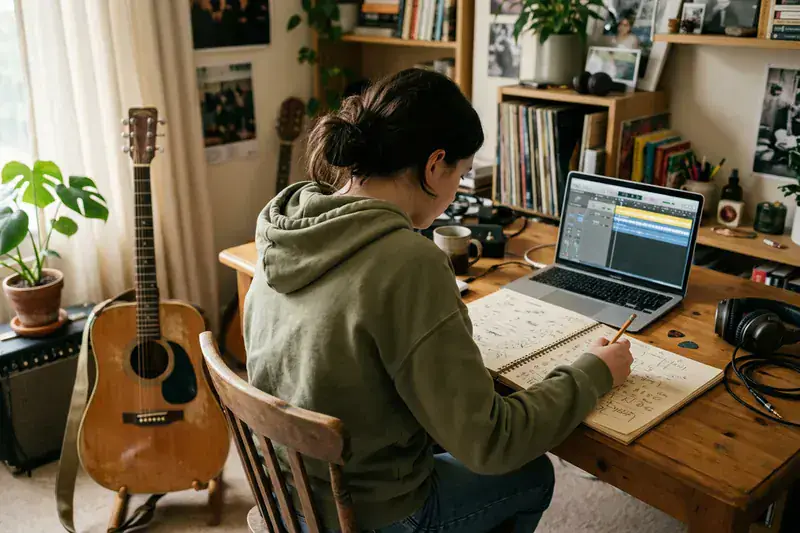
Start with a hook
A hook is the short idea a listener can remember: it might be a phrase, a rhythm, or a small melodic shape. Begin with a subject you know and write one plain sentence about it. Then shorten the sentence until it carries one clear thought. Keep every word original to you.
You can hum a melody into a voice memo or mark its shape with arrows in a notebook. There is no need to borrow a lyric or imitate a recording to get started.
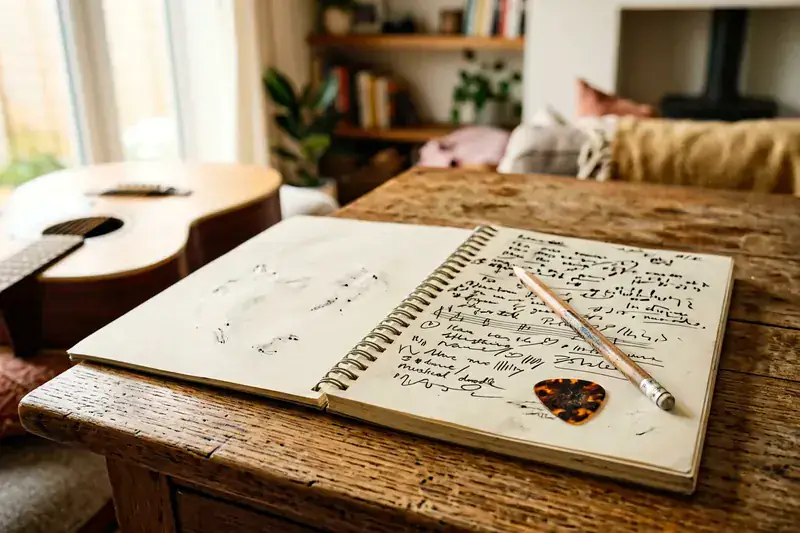
The hook is the part people remember, so write it first and write it short — usually one line and one melody, repeatable without effort. A hook that you can sing while walking to school is a hook that works. If you need to think about it, it is not one yet.
Say the hook out loud in different rhythms before touching an instrument. The rhythm is what makes it stick, and it is much easier to find without chords competing for your attention.
Build a simple chord loop
A repeating loop can give a first song a steady base. One familiar kind of pattern is I–V–vi–IV: Roman numerals describe scale-degree relationships, not a fixed set of chords for every key. Ask a teacher to help choose a comfortable key and a simple voicing for your instrument.
Play the loop slowly and listen for where the hook feels settled. You do not need a full chord sheet; a few symbols in your own notes are enough to remember the order.
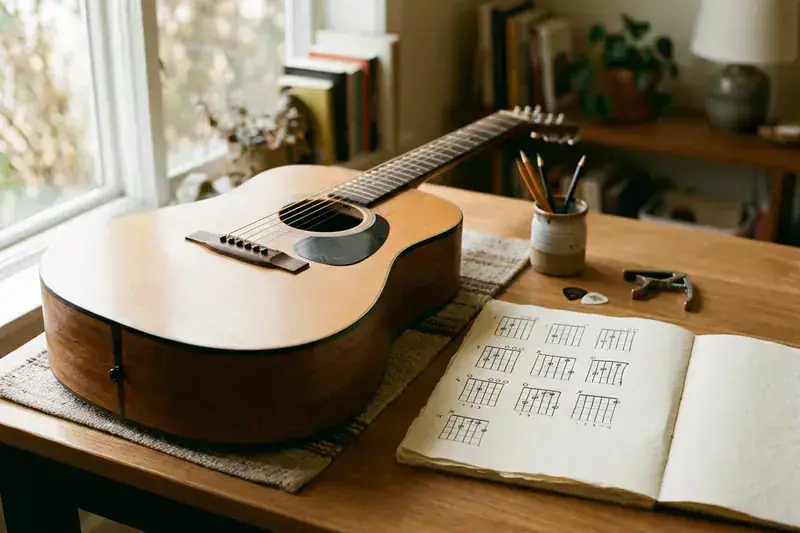
Four chords, repeating, is enough for a first song — the common progressions are common because they work. Play the loop until you can do it without watching your hands, then sing the hook over it. If the hook fights the chords, move the loop up or down a fret rather than rewriting the hook.
Keep the loop simple on purpose. A song with a plain accompaniment and a strong hook sounds finished; a song with a busy accompaniment and a weak hook sounds like a practice exercise.
Write a chorus in 4 lines
Give each line one job: state the main idea, add a concrete detail, turn the thought, and return to the hook. Read the lines aloud to check that they sound natural. If a line is crowded, remove a word or let the music carry a pause.
Keep the draft yours. Do not paste lyrics from a song, a website, or a social post into your chorus. The exercise is to develop your own language and rhythm.
Four lines, one idea, the hook in the first or last line. Do not try to tell the whole story in the chorus — that is the verse's job. The chorus should be the thing you would shout if someone asked what the song is about.
Say each line out loud and cut any word you would not say in speech. Songs fail at this stage more often from too many words than from too few, and a line that is easy to sing is easier to remember.
Record a rough demo
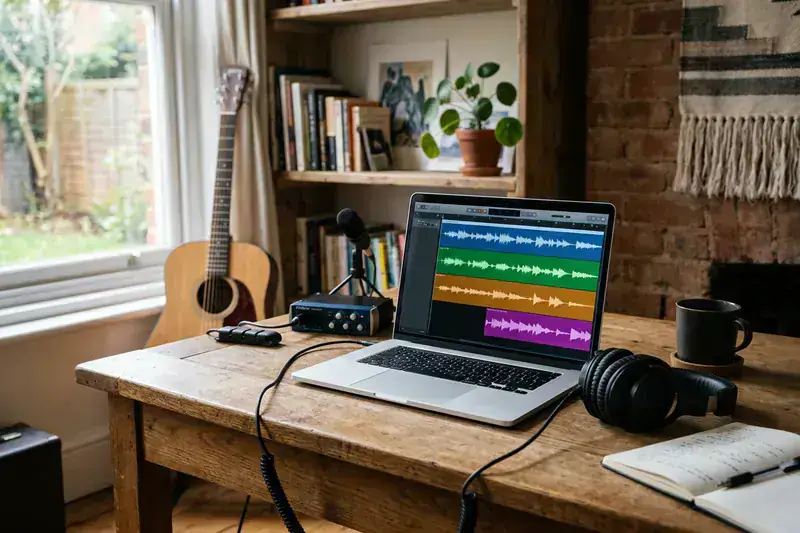
Use a phone or laptop to capture one take of the hook and chorus. A rough demo is a listening tool, not a polished release. Keep the room quiet, place the device where it can hear both voice and instrument, and make one note afterward about what you want to change.
Save the recording somewhere your family controls and label it with a date so you can find later drafts. You can make a second take after one useful revision instead of recording endlessly.
One phone, one take, no editing. Play the whole song through even when you make a mistake, because stopping teaches you nothing about the song's shape. Then listen back once and write down the two moments that felt wrong.
Keep every demo. A folder of rough recordings is the clearest record of how your writing is developing, and it is much more motivating than a notebook of unfinished lyrics.
Copyright basics for your own song
Use your own lyrics, melody, and arrangement ideas, and be careful not to copy a recording or someone else’s words. For official U.S. information about copyright, registration, and related questions, visit the U.S. Copyright Office. This guide is educational, not legal advice; ask a parent or guardian to help with rights questions.
Keep your working drafts organized. If you want to share or publish a song, a parent or guardian can help you understand the options before you upload it.
In the USA, copyright exists from the moment a song is fixed — written down or recorded — and registration with the US Copyright Office adds the ability to sue for damages, not the copyright itself. For a teenager writing their first songs, a dated recording is a useful and cheap record of authorship.
Do not copy a melody from a song you love, even accidentally and even in a demo. If a phrase reminds you of an existing song, change it before you share it. Citing an influence in conversation is normal; borrowing the actual melody is a different thing.
Parents and booking
For a student under 18, I contact a parent or guardian before a lesson is booked. No enrollment or class goes ahead until a parent or guardian has agreed to these terms and confirmed in writing.
A parent or guardian can join the lesson conversation, discuss the student’s goals, and help decide what to share or record. The first idea can stay private while you learn how to shape it.
Lessons are one-to-one, online, weekly, with notes between sessions. For songwriting the work is mostly on the student's own material, so a lesson is a workshop rather than a lecture — bring what you have written, even if it is one line.
The free introductory session is the right place to start if you want to know whether the teacher's approach suits a teenage writer. Bring the hook you are proudest of and one that is not working yet.
Next steps
Choose one hook, make a simple loop, and record one rough take. Read about lesson fees, contact me with a parent or guardian through the contact page, or browse the guide to choosing a first instrument. Bring your own idea to the introductory conversation.