
Choosing a First Instrument for Your Child: A US Guide
A practical way for US families to compare a child’s interest, instrument fit, home setup and lesson options before deciding.
By Dr Banerjee ·
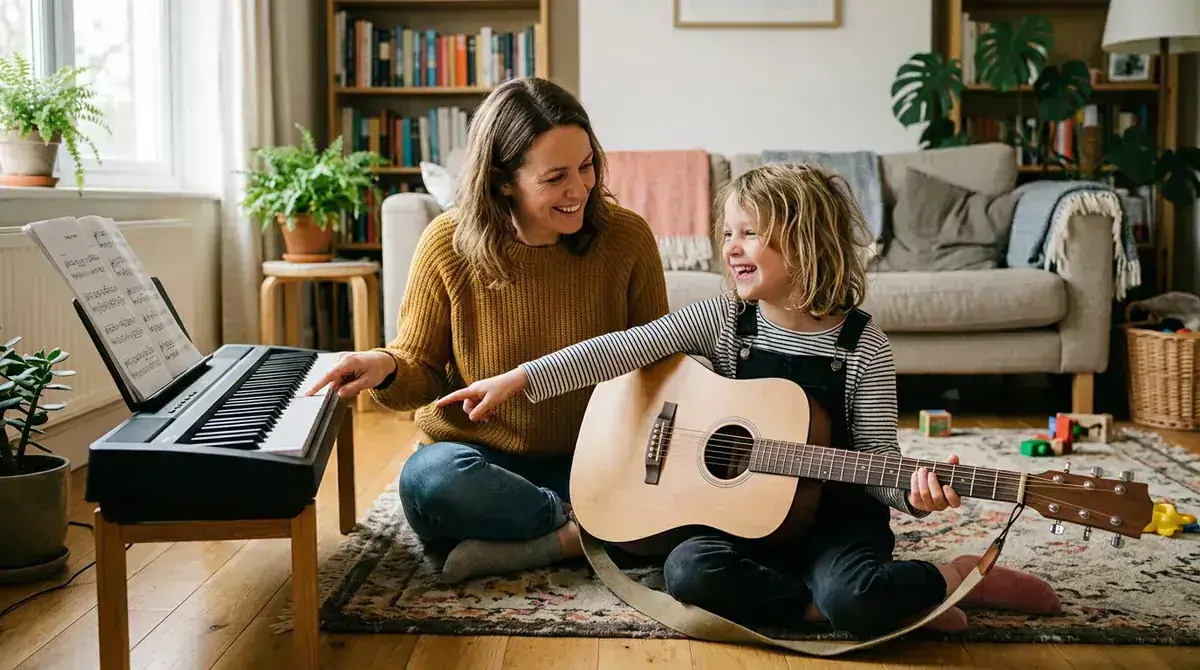
Start with what the child wants to hear
Choosing a first instrument for your child is easier when the child has a say. Notice which sounds they return to, which songs they enjoy and whether they are drawn to melody, rhythm or singing. A preference is not a binding decision; it is useful information for a first trial and conversation.
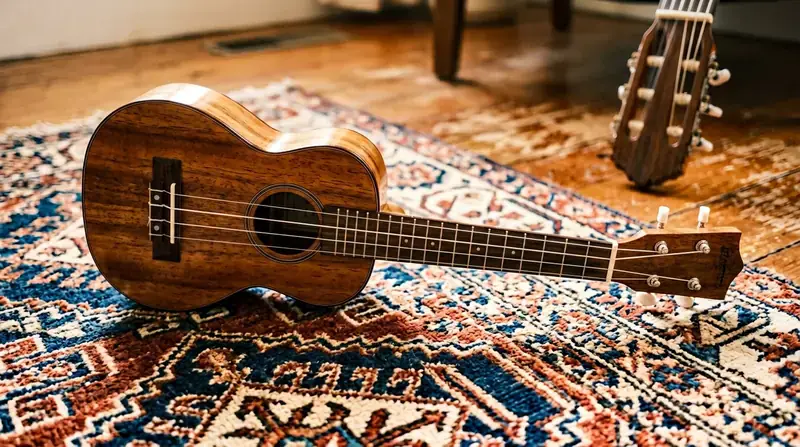
If the child is curious about more than one option, let them watch or hear a short demonstration of each. Avoid telling them one instrument is easy or guaranteed to be right. The most suitable beginning depends on interest, comfort and the family’s practical routine.
Play three or four short excerpts from different instruments and watch which one the child asks about afterwards. That reaction is more useful than any questionnaire, and it is available for free. A child who is drawn to the sound of a cello will tolerate the physical difficulty of a cello in a way they never would for a piano chosen for them.
If the child says "I don't mind", treat it as no answer rather than a preference for the cheapest option. Try a second listening session a week later with different material — a rhythm-heavy piece, a solo line, a song with a strong vocal — and see whether anything repeats.
Check the physical fit and household setup
Think about instrument size, safe storage, volume and where practice could happen. A child should be able to sit or stand comfortably, reach what they need and handle the instrument with appropriate supervision. A keyboard may need a stable stand; a guitar needs a size that does not force awkward posture.
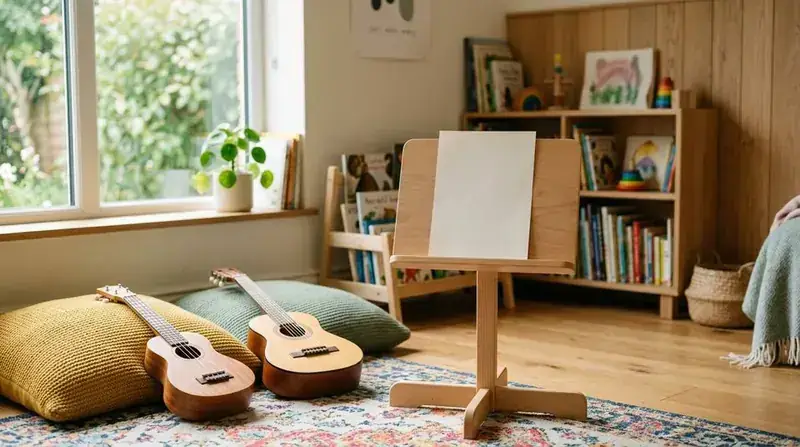
Consider whether the family can keep the instrument out of the way but easy to reach. Noise and shared rooms matter too. An online teacher can discuss which setup makes sense for a particular instrument before the family buys accessories.
Measure the child against the instrument before buying: reach, hand span and, for wind instruments, whether the mouth and teeth are ready. Then measure the house: is there a room where a trumpet can be practiced without a complaint, is there a wall a piano can stand against, is there a cupboard the case can live in without being a daily obstacle.
The household answers eliminate more instruments than the child's enthusiasm does, and it is much kinder to rule them out now than after three months and a purchase. A keyboard with headphones is often the compromise that keeps a musical child in a small apartment.
Try a lesson conversation before committing
A free introductory session can help a parent and child describe their interests and see how a teacher communicates. Use the time to ask what a beginner lesson includes and what equipment is needed. There is no need to commit to a long-term course simply to learn whether a teacher and format feel suitable.
After that discussion, compare the monthly plans and class counts on the fees page. Choose one subject for each student, and revisit the instrument choice if the child’s interests change over time.
A short conversation with a teacher, with the child present, resolves most of the remaining uncertainty: what the first month would look like, which instrument size to look for, and whether the teacher's manner suits this particular child. Ask the child afterwards whether they would be happy to see that person weekly; a child's answer to that question is usually accurate.
Nothing needs to be bought before that conversation. Turning up with no instrument and a list of questions is the normal, sensible way to start, and any teacher who finds that odd is telling you something useful about how they work.
Run a low-pressure two-week instrument trial
Before making a large purchase, let a child try a few instruments in short, playful sessions. Notice which sounds they return to and whether the physical size feels comfortable. A teacher can suggest a simple trial plan using a family instrument, rental, or borrowed option.
- Let the child choose between a small number of instruments rather than a long catalog.
- Try a short song or sound on each option, then talk about what felt enjoyable.
- Avoid treating an early preference as a permanent commitment.
Two weeks, three short sessions, no purchase and no performance. Borrow or rent where you can, or use the school's instrument. At the end of the fortnight the question is not "is the child good at this" — nobody is good at anything in two weeks — but "did they go back to it without being asked".
If the answer is yes, buy or rent properly and begin. If the answer is no, try one different instrument rather than concluding that the child is not musical. Two weeks of a badly sized instrument tells you about the instrument, not about the child.
Check size, access, and maintenance before buying
The right instrument has to fit the child and the household. Consider how it will be stored, tuned, transported, and practiced on school nights. A guitar that is difficult to press or a keyboard with too few useful keys can make the first months harder than they need to be.
- Measure the playing space and check the instrument’s dimensions.
- Ask about tuning, upkeep, and what accessories are genuinely needed.
- Confirm that the child can reach and use the instrument comfortably.
Write down three numbers before you spend anything: the size or model the teacher recommends, the cost of a yearly service (reeds, strings, tuning, pads), and where the instrument will live. If the yearly service is more than a fifth of the purchase price, ask whether renting for the first year is the better plan.
Access matters as much as cost. An instrument that needs to be taken out of a case, assembled and tuned before every practice will be practiced less than one that is already set up. For a beginner, the second instrument is nearly always the one that gets played.
Let the child compare sounds without a long instrument list
A child’s first preference can emerge from a few guided choices. Play short examples of different instruments and ask what sound they want to try making. Keep the choices manageable and let the student explain what they liked; this is more useful than asking them to select from every instrument at once.
- Choose two or three sounds to compare in one sitting.
- Ask the child to describe a favorite sound or song.
- Return to the top choice another day before making a purchase.
Avoid changing instruments every time practice feels hard
Every new instrument has an unfamiliar stage. If a child gets frustrated, first check the size, setup, and task before switching immediately. A teacher can tell whether the difficulty is a temporary skill challenge or a mismatch between the instrument and the child’s interest.
- Ask what part feels difficult before changing plans.
- Try a smaller lesson task or a different song on the same instrument.
- Review the decision with the child after a short trial period.
Related: Browse all instruments and Lessons for children.
Frequently asked questions
Which instrument is easiest for a child to learn?
There is no single easiest instrument for every child. Interest, size, sound, and regular access matter. A short trial and a conversation with a teacher can help a family choose a realistic first step. Write down what the child enjoyed, then compare that with the family’s available time.
Should a family buy an instrument before booking a lesson?
It is often better to ask first. Share the child’s interests, available space, and any instrument already at home. The teacher can explain what is sufficient for an introductory conversation and what features matter later. A teacher can help identify a practical size before the family makes a purchase.
How can we tell if a child is ready to start?
Look for curiosity and a willingness to try short activities, not perfect concentration or prior skill. A family can discuss the child’s age, schedule, and goals with the teacher before deciding on regular lessons. The best choice is one the child can reach, enjoy, and use consistently.
Ready to explore lessons?
Compare the monthly fees and plans or learn what happens in the free introductory session.