
Rap Flow for Teens: Rhythm Practice at Home
Rap flow is the way words and pauses sit against a beat. These home drills for teens focus on rhythm, breath, and original writing—not on copying lyrics or claiming a song is trending. Start with your own words and a comfortable tempo.
By Dr Banerjee ·
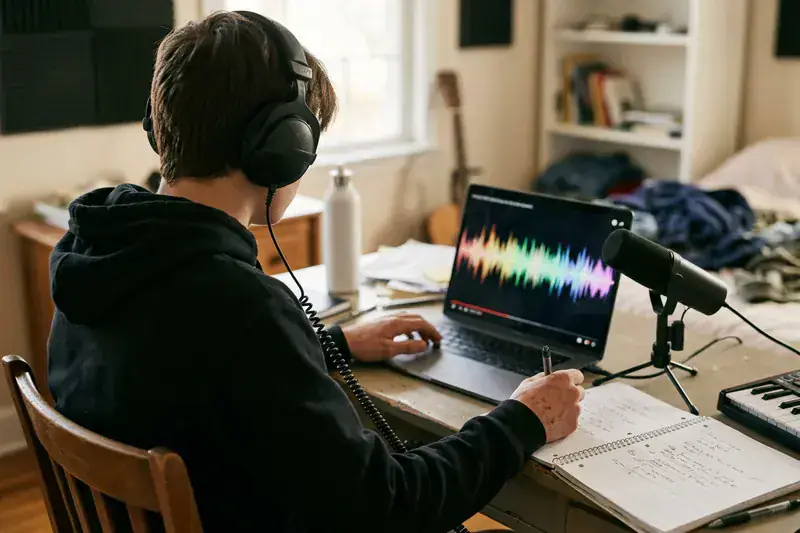
What “flow” means in plain words
Flow is how syllables, emphasis, and pauses fit with a beat. A clear delivery can be relaxed or quick; the key is that the listener can follow the words and hear where the pulse sits. You do not need a complex track to begin—clapping a steady beat is enough.
Pick a topic from your own day, a hobby, or a place you know. The practice is about arranging original words, not borrowing a verse from a recording.
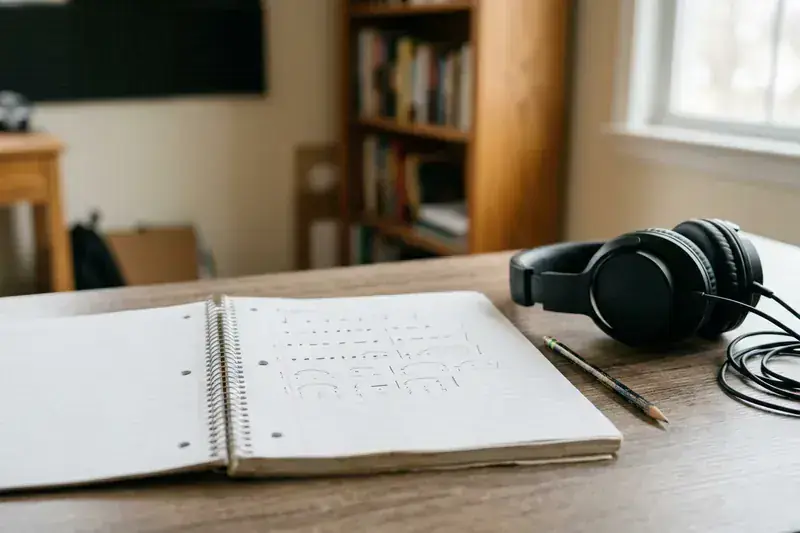
Flow is how your words sit against the beat: where you start, where you land, and how you fill the space in between. Two rappers can use the same beat and the same tempo and sound completely different because one lands on the downbeat and the other pushes ahead of it.
It is a rhythmic skill before it is a writing skill, which is good news: you can practice it with nonsense syllables and a metronome, without needing a finished verse. Most beginners write lyrics first and then discover they cannot fit them to a beat; the order is the other way round.
Clap the syllables first
Write a short original sentence, then speak it naturally and tap once for each syllable you hear. Clap the pulse underneath and notice which syllables land on a beat and which fall between beats. Try the sentence again with one deliberate pause.
Do not worry about making a finished lyric. A few neutral words or syllable marks in a notebook are enough to practice placement without quoting a song.
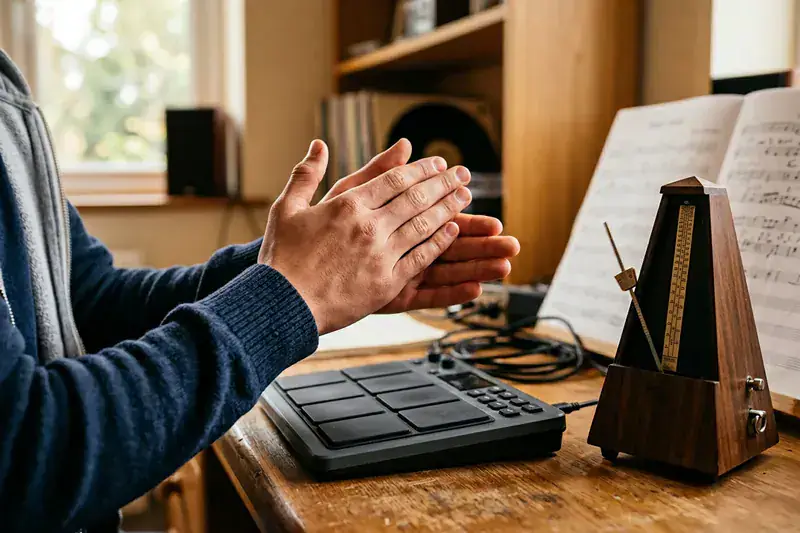
Take one line you have written and clap every syllable while counting the beat out loud. You will immediately hear where the line is too long or too short for the bar. Adjust by removing a word rather than by rapping faster — the second is what makes a beginner sound rushed.
Then clap the line with the stress on the syllables you want emphasized. A line with the wrong stresses sounds wrong even when the words are good, and moving one stress is often the whole fix.
Count the beat with a metronome
Choose a slow, comfortable click and count along before you speak. Keep the count steady for four measures, then place your original phrase over it. If the words bunch up, remove a few or leave a rest. If they feel too sparse, add a pause or repeat a sound you created yourself.
Record only a short take and listen for one detail at a time: whether the count stays even, whether consonants are clear, or whether the breath arrives comfortably.
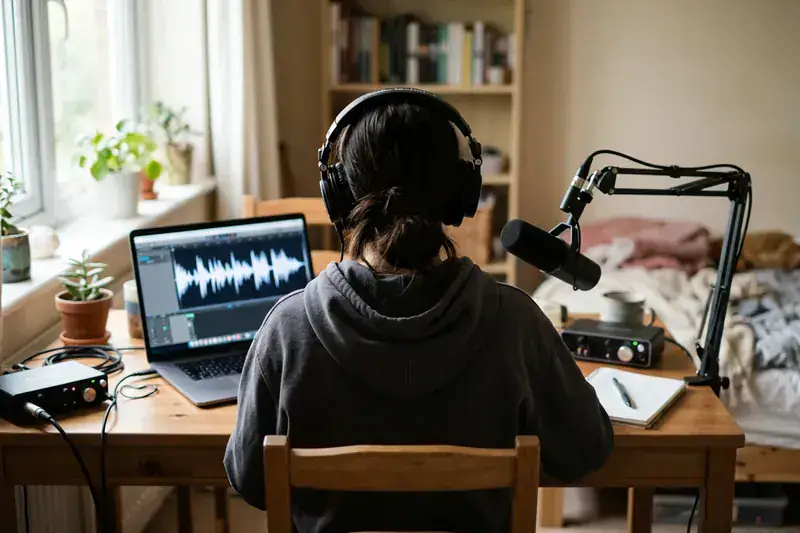
Set a metronome to 70 or 80 beats per minute and count one, two, three, four out loud. Then fit your line into one bar, starting on the first beat, and stop dead at the fourth. Silence at the end of a bar is not a mistake; it is what makes the next line land.
Once that is comfortable, start the line on beat two instead of beat one. This is called an off-beat entrance, and it is the single easiest way to make a simple verse sound more advanced. Practice it slowly until it is automatic, then speed up.
Write a 16-bar original verse
Plan sixteen short measures as four groups of four. Give each group one small idea—an opening, a detail, a turn, and a closing thought—and use your own words throughout. Mark syllable counts or rests above the page if that helps you see the rhythm.
No sample lyrics are needed. Keep the first draft private, revise one line at a time, and do not paste in a line from a song or a social-media clip.
Sixteen bars, four beats each, is the standard verse length and a good first target. Write four lines of four bars, or eight lines of two bars — both work. Keep a notebook of single lines that sound good, because assembling a verse from good lines is much easier than writing a verse from nothing.
Do not worry about the subject matter being impressive. A verse about your week, your walk to school or a game you play is easier to write with rhythm than an abstract theme, and the rhythmic skill is what you are practicing.
Breath and recording at home
Before recording, stand or sit comfortably and speak the verse at an easy volume. Mark a breath at a natural pause rather than trying to squeeze every word into one exhale. A phone or laptop recording can help you notice timing; use a quiet room and keep the microphone at a comfortable distance.
If your voice hurts or feels strained, stop practicing and speak with a parent or guardian.
Mark on your page where you will breathe — usually at the end of every two bars. Most beginners run out of air because they never planned a breath, not because their lungs are small. A breath marked in pencil is a breath taken.
Record on your phone, with headphones on, and listen back for two things only: did you stay with the beat, and could you hear every word. Do not judge the writing yet. Fix the timing first, because a well-timed simple verse sounds far better than a clever one that drifts.
Parents and booking
For a student under 18, I contact a parent or guardian before a lesson is booked. No enrollment or class goes ahead until a parent or guardian has agreed to these terms and confirmed in writing.
A parent or guardian can help choose a comfortable space, discuss online privacy and recording choices, and join the first conversation. Keep any practice recording on a device controlled by your family and share it only when you choose.
Lessons are one-to-one, online, weekly, with notes on what to practice between sessions. The work is rhythmic and verbal, so it needs a room where the student can speak at full volume without being self-conscious — that is the main practical requirement.
If you are not sure where to start, book the free introductory session and bring one line you have written. Ten minutes of clapping it to a beat will tell both of you more than a conversation about influences.
Next steps
Try one four-measure rhythm, write a fresh phrase, and listen once for timing. Compare the lesson fees, ask a question on the contact page, or explore online singing lessons for related voice practice. A teacher can help you build an original routine around your goals.