
Online Singing Lessons for Adults in the USA: What to Expect
What adult beginners can discuss in a first voice lesson, from musical goals and room setup to manageable practice between sessions.
By Dr Banerjee ·
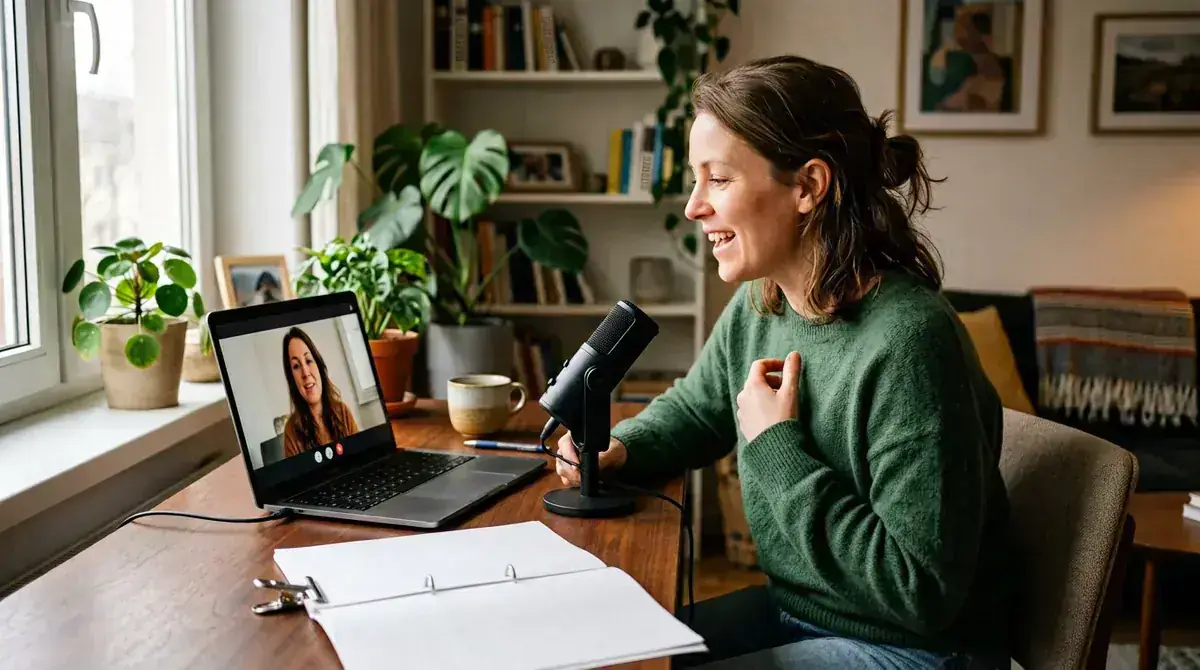
Bring a goal, not a perfect voice
Online singing lessons for adults in the USA can begin with a conversation about what you want to sing, what experience you have and what feels difficult. You do not need to arrive with music theory knowledge or a polished performance. A teacher can listen to a comfortable phrase and help identify a useful first step.
Goals might include singing in tune, feeling more at ease with a song, improving breath coordination or exploring repertoire in another language. The right starting point depends on the individual; avoid judging your voice against a recording made in a studio.
Say what you want to be able to do: sing a whole song without running out of breath, sing in tune with a guitar, sing a specific song at a family event. Then say what currently stops you. Those two answers give a teacher more to work with than any amount of self-assessment, and they remove the embarrassment that keeps adults away from singing lessons for years.
No audition is involved. A teacher will ask you to sing a comfortable phrase and will listen for pitch, breath and tension, not for beauty. Adults who arrive apologizing spend the first ten minutes recovering from the apology; arrive having decided the voice is a work in progress and the lesson starts immediately.
Make the room and microphone work for you
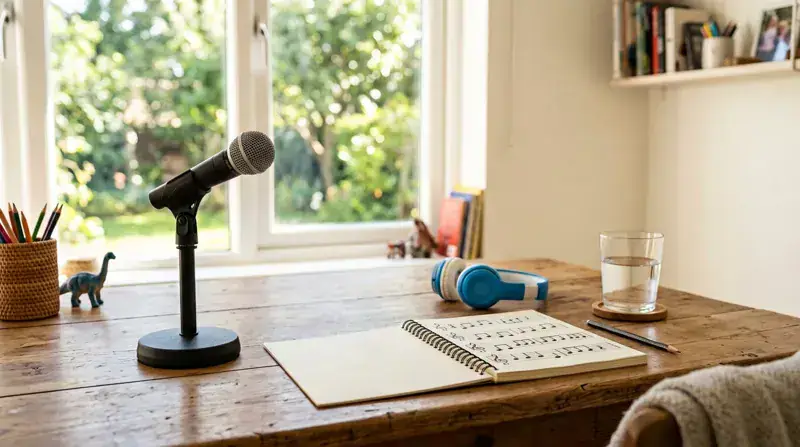
Choose a quiet space and place the device where the teacher can see your face and upper body. A built-in microphone can be enough to begin; try a short sound check before the lesson. If headphones make it hard to hear your own voice naturally, ask whether one ear can remain uncovered.
Keep water nearby and leave enough space to stand or sit comfortably. A separate microphone is optional. Avoid singing at a volume that causes strain simply to overcome room noise; a teacher can suggest a better setup or a more comfortable starting range.
Sing with headphones on so you hear yourself as the teacher does, and put the microphone slightly to one side rather than directly in front of your mouth. A room with soft furnishing and a closed window is better than a tiled bathroom, which flatters the voice and hides the problems the lesson is meant to address.
Check the level before the lesson starts, not during it: sing the loudest phrase you expect to sing and watch the meter. A voice that clips is worse than a voice that is quiet, because the teacher cannot hear the pitch at all.
Use gentle practice between lessons
A short, comfortable warm-up and one song phrase can be a practical routine. Stop if you feel pain or persistent strain, and ask the teacher how to approach a difficult passage safely. Progress is not measured by how loudly or how high a student can sing.
Before choosing a plan, ask how the teacher gives feedback and what practice between sessions might look like for your goals. One free introductory session lets you talk through fit first. Plan prices are listed on the fees page.
Ten minutes, four days a week, is the target for an adult beginner. Start with two minutes of easy humming on a comfortable pitch, then work on the one phrase from the lesson, then stop. Singing practice is limited by the voice's recovery, not by your schedule, and a twenty-minute session that leaves you hoarse costs two days.
If the voice feels tired, stop and come back tomorrow. Soreness is not evidence of effort in singing; it is evidence that something was squeezed, and the habit of pushing through it is the one habit worth breaking early.
Warm up gently and never sing through pain
A comfortable speaking-level hum or easy vowel can help you notice how the voice feels before a song. Do not force higher notes or volume to prove progress. If singing hurts or leaves you unusually hoarse, stop and discuss the experience with the teacher.
- Begin in a range that feels easy, not at the highest note you can reach.
- Take a quiet pause between phrases and sip water as needed.
- Describe discomfort clearly; a teacher can adjust the exercise or recommend appropriate next steps.
A warm-up is a few minutes of easy sound, not a workout: humming, lip trills, a gentle slide up and down through the comfortable range. If a note hurts, the note is too high, too loud, or being produced with the throat rather than supported. Stop, drop the pitch, and try again quietly.
Pain, hoarseness that lasts into the next day, or a voice that disappears after twenty minutes are reasons to stop and talk to a teacher before continuing. They are also, occasionally, reasons to see a doctor, and no singing lesson is worth singing through them.
Make a simple home audio check
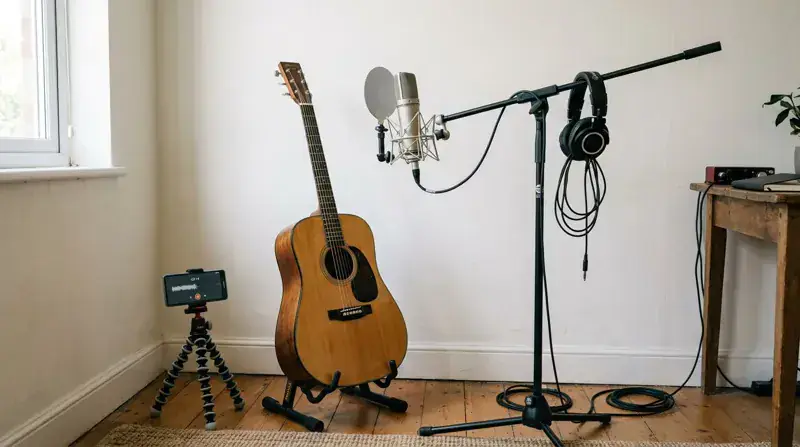
A laptop or phone microphone can work when it is placed at a natural distance. Turn down background music and choose a room with less echo. The teacher needs to hear your voice clearly, not a polished recording, so test the ordinary setup you will use for practice.
- Position the microphone slightly away from direct breath.
- Use headphones only if they do not make your voice feel delayed or uncomfortable.
- Ask the teacher whether a song key or backing track should be changed for your range.
Record thirty seconds of yourself on the same device each week and keep the files. The improvement is too gradual to hear day to day and obvious across a month. Use the recording as note-taking material for the lesson rather than as a performance to judge, and listen for pitch and breath rather than for tone.
Send the teacher the recording before the lesson if you are working on something specific. A teacher who has heard the week's practice can spend the session fixing the actual problem rather than reconstructing it.
Map a comfortable starting range with one familiar song
Choose a song you know well and notice which lines feel easy to sing. That gives a teacher useful information about pitch, pronunciation, and the music you enjoy. Do not force a note that feels too high or low; a teacher can suggest a different key or a smaller exercise.
- Bring one familiar song to the introductory conversation.
- Mark the phrase that feels most comfortable and the one that feels difficult.
- Ask whether a different key or starting note would help.
Pick a song you can already sing without strain and find the highest and lowest note in it. That span is your current working range, and it is the range the lessons should start in. Most adults discover it is narrower than they expected and higher or lower than the songs they actually want to sing.
Then transpose: sing the same song a tone or two down and see whether it becomes easier. Singers who insist on the original key spend months fighting the material rather than learning the technique, and the key is the easiest variable in the whole setup to change.
Use a short recording as a listening note
A brief recording can help you remember what you practiced, but it is not a performance grade. Listen once for one detail, such as a clear vowel or steady phrase ending, and write a question for the teacher. Avoid replaying a clip to criticize every sound.
- Record a short phrase only when it is useful to you.
- Listen for one musical detail rather than judging the whole voice.
- Bring questions about the recording to the next lesson.
Related: Singing and vocals lessons and Lessons for adults.
Frequently asked questions
Can adults start singing lessons with no experience?
Yes. An introductory conversation can establish what you enjoy and what you would like to learn. Lessons can begin with listening, comfortable pitch, and simple songs rather than requiring auditions or previous music training. Bring that preference to the teacher and agree on a comfortable first exercise together.
Do online singing lessons work over video?
Video lessons allow a teacher to hear and observe a student in real time. A quiet room, stable connection, and microphone at a natural distance make it easier to discuss sound and musical choices. Use the same room for a quick test so the lesson setup feels familiar.
What if I feel nervous about singing in front of a teacher?
That is common. Start by explaining what feels uncomfortable and choose a short song or exercise you know. The introductory session is a chance to see whether the teaching approach feels supportive before choosing regular lessons. You can begin with one song and decide later whether regular lessons feel right.
Ready to explore lessons?
Compare the monthly fees and plans or learn what happens in the free introductory session.