
Singing Trending Songs as a Teen: Range and Breath
Songs teens hear around them can make a useful practice starting point. This plan uses trending songs as practice material while keeping vocal range, comfort, and your own sound in view; it makes no chart-position claims.
By Dr Banerjee ·
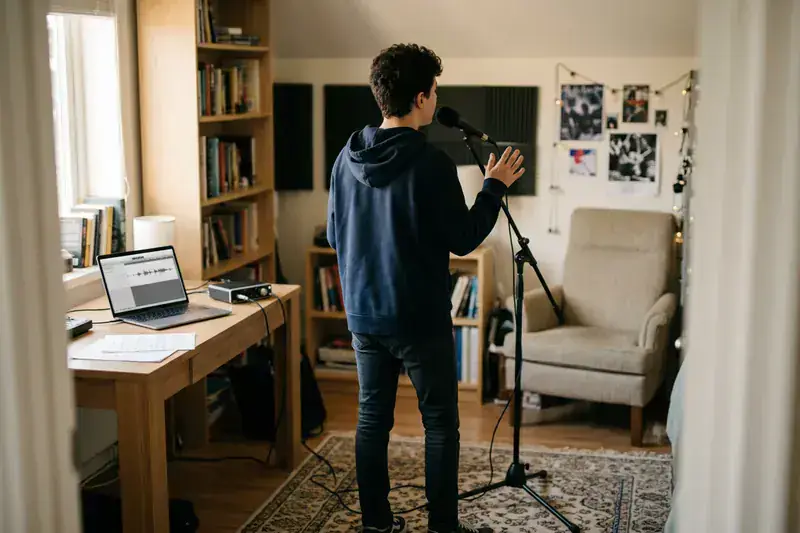
Why trending songs help teen singers
Trending songs can give a teen a familiar sound to listen for, but popularity is not a practice plan. Pick a song you enjoy and use a short, comfortable phrase as a listening prompt. Notice where the melody sits, how long the breath lasts, and which notes feel easy before trying to sing along. This guide does not report chart positions or claim that a particular song is currently trending.
Keep the goal small: learn to hear your own pitch and choose a key that feels comfortable. The recording is a reference for listening, not a target your voice has to copy.
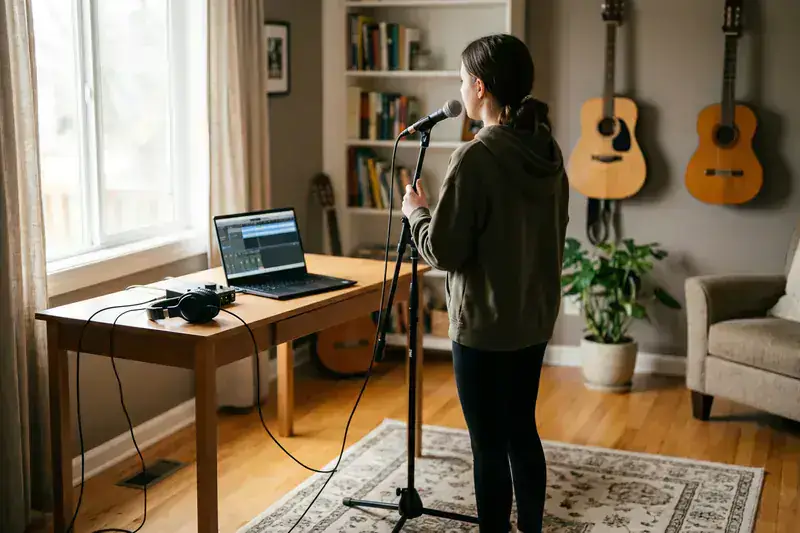
A song the student already loves does half the teaching: the motivation to practice it is built in, and the ear already knows how it should sound. Trending songs also tend to sit in narrow, repetitive ranges, which is genuinely useful for building accuracy before range.
The trap is range. Many popular songs are written for an adult voice and sit a fourth or fifth above where a young singer is comfortable, and singing them at the recorded pitch is how voices get strained. Transpose first, then practice.
Find your comfortable range first
Start with a few gentle notes in the middle of your speaking-and-singing range. Move up or down in small steps, and stop before a note becomes strained. A familiar melody can help you notice where the tune feels relaxed, but do not push for a high note just because the recording reaches it.
Try the phrase at a lower starting note, or choose a different song. A teacher can help you identify a comfortable place to begin without treating a temporary range as a fixed limit.

Sing a simple scale up and down on a comfortable pitch, and stop when it stops feeling easy. The span between the lowest and highest easy note is your working range this month, and it is the range to practice in. It grows, but only from easy singing at its edges.
Then check the songs you want to sing against that range. Most phones and most music apps will transpose a track; if yours will not, sing the song a few notes lower and see whether it becomes comfortable. A song sung in the right key for your voice sounds better than the same song strained in the original.
Breath support: a 5-minute daily drill
Set a timer for five easy minutes. Sit or stand comfortably, let your shoulders stay loose, and take a quiet breath without trying to fill your lungs to the limit. Exhale gently on a soft “sss” sound for a few counts, rest, then repeat. Keep the sound easy; this is a coordination drill, not a test of how long you can hold a breath.
If you feel light-headed, stop and breathe normally. Keep the routine short enough that you can return to it tomorrow without tension.
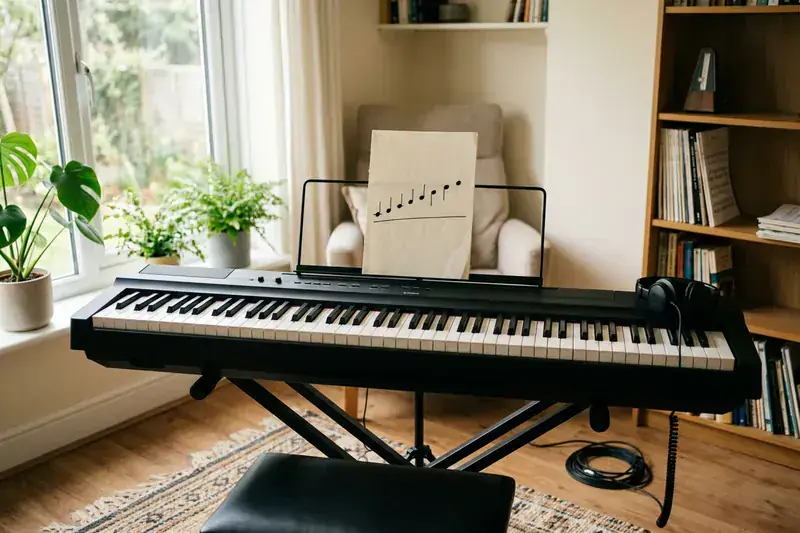
Breathe in for four counts, hold for four, out for eight, with the shoulders still and the ribs wide. Twice through, then sing a single comfortable note for as long as the air lasts without squeezing. Five minutes a day, and the improvement in the last line of a song is noticeable within two weeks.
Do not practice breath support by singing louder. Loudness comes from air pressure, and pressure without support is exactly what makes a voice tired. The drill is quiet on purpose.
Pitch accuracy with a simple scale routine
Choose one comfortable starting note from a keyboard, a tuner, or a teacher’s reference tone. Sing a short five-note pattern up and back down, listening for whether each note lands close to the reference. Repeat slowly, then pause and try again without the reference. The aim is careful listening, not speed or volume.
Record a few seconds if that helps you compare attempts. Listen once for pitch, then stop; repeated playback can become distracting if you do not have one clear question to answer.
Play a drone or a single held note, then sing the note, then the one above it, then back. Check each against the drone rather than against your memory of the previous one. Five minutes of this is worth more than twenty minutes of singing along to a track, because a track hides your mistakes.
Record the routine once a week and listen back with headphones. The point is to notice drift, not to judge the tone. Singers who can hear themselves drift fix it in weeks; singers who only sing along to recordings often never notice it at all.
Practice with a song, without copying the recording
Choose a short section and first listen for its shape: where the melody rises, where it settles, and where a breath might fit. Then sing the phrase in a comfortable key, using your own tone and timing. Do not copy a singer’s accent, vocal color, or intensity if it makes your voice feel tight. A song title can be a useful reference; lyrics and a full transcription are not needed for this exercise.
Try humming the contour, singing it on a neutral syllable, or making a simple original warm-up with a similar up-and-down shape. Keep your own musical choices at the center.
Learn the melody by ear, then sing it with the backing track removed, then put the track back on and check. That order teaches you the actual tune; singing along from the start teaches you to follow someone else's voice, which is a different and much easier skill.
Then make one deliberate change of your own: a different ending, a softer second verse, a small ornament. It turns a cover into a performance, and it is the first step towards singing in your own voice rather than imitating a recording.
Parents and booking
For a student under 18, I contact a parent or guardian before a lesson is booked. No enrollment or class goes ahead until a parent or guardian has agreed to these terms and confirmed in writing.
A parent or guardian can join the introductory conversation, help choose a comfortable song, and share any questions about schedule or lesson setup. If singing hurts or your voice feels unusually strained, stop practicing and speak with a parent or guardian.
Lessons are one-to-one, online, weekly. For a teenage singer the practical requirements are a room where they can sing at full volume, headphones, and a device at eye level — no stage, no audience, no pressure.
The free 15 to 30 minute introductory session is a chance to sing a phrase and be heard, without an audition. Bring a song you like and one you find difficult, and the teacher will tell you honestly which is closer to where you are.
Next steps
Choose one comfortable phrase, one five-minute breath drill, and one listening goal for the week. Keep notes on what felt easy rather than chasing a higher note. Compare the lesson fees, ask a question through the contact page, or read about online singing lessons for adults before deciding whether to book.