
Guitar or ukulele for a seven-year-old?
The answer is almost always the same, and it has nothing to do with which instrument is easier to play. It comes down to fingertips, and to week two.
By Dr Banerjee ·
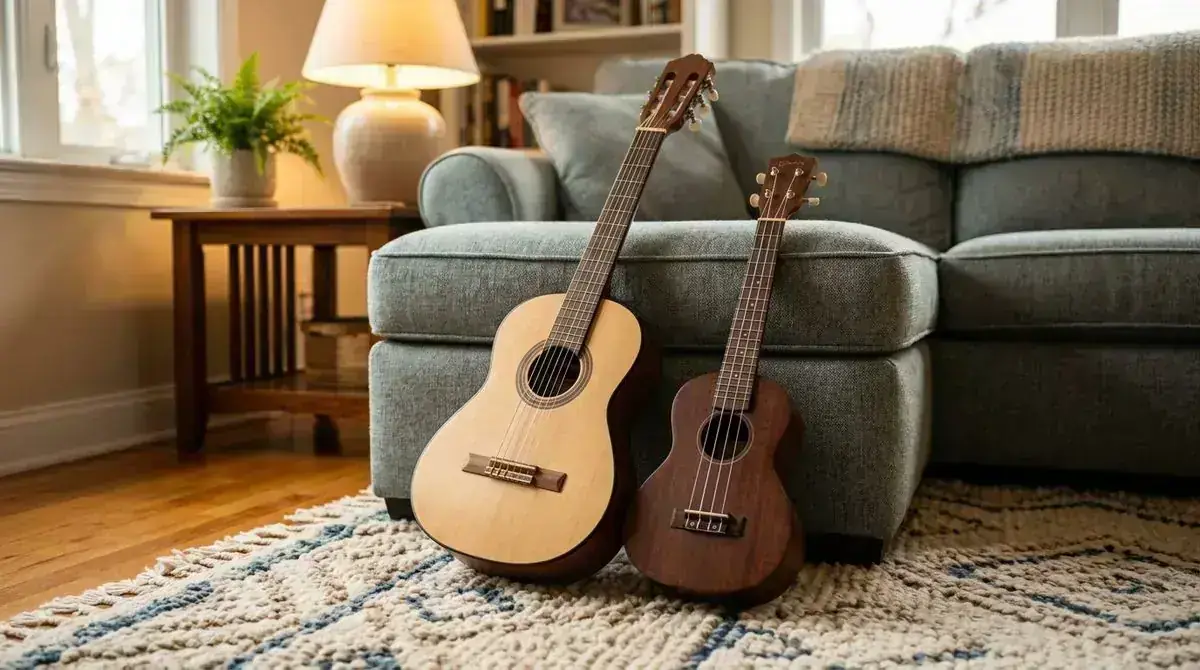
Start with ukulele. Here is why.
Two reasons, and neither is cuteness. First, nylon strings do not hurt small fingertips, and steel ones do. Second, a child can play a recognizable song on a ukulele within a week or two, and that early win is what carries them through the boring bit that comes after.
Four nylon strings need very little finger strength, the frets are close together, and the instrument is small enough for a five-year-old to hold without a strap. A child can play a two-chord song in the first lesson, and the sound of a badly played ukulele chord is still recognisably music — which matters enormously to a beginner's willingness to continue.
The instrument is also cheap enough to be replaced by a better one in a year without anyone feeling they wasted money, and a good soprano or concert ukulele holds its value well enough to sell on. For a first instrument, low cost and low physical demand are not compromises; they are the correct choice.
The objection to that advice
A parent will reasonably say: but they want to play guitar. They usually do, and they usually want to play guitar because they have seen someone play guitar. That is a real motivation and worth respecting — but it is worth knowing that a child who quits ukulele has lost a hundred dollars, and a child who quits guitar has lost the same plus six weeks of sore fingers.
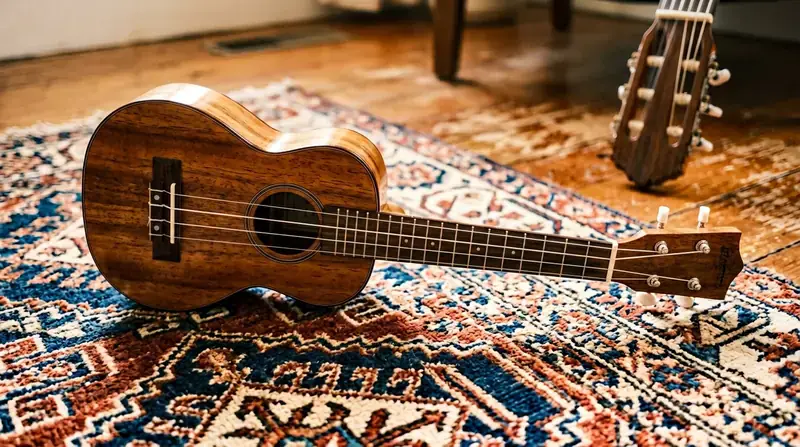
The usual objection is that the ukulele is not a serious instrument and the child will have to start again on guitar. In practice the opposite is more common: the child arrives at the guitar already able to keep time, change chords and sing while playing, which are the three things that take longest to learn on any instrument.
The second objection is that the child wants a guitar specifically. If the child is old enough to hold one and the motivation is real, take them at their word. Motivation is the scarcest resource in a child's musical education, and it is worth more than a teacher's preference for a sensible progression.
What actually transfers
Nearly everything that matters. Chord shapes, strumming patterns, keeping time, reading a chord chart. A child who has played ukulele for a year moves to guitar fast, because the hard part of guitar is not the extra two strings — it is the rhythm and the chord changes, and they already have those.
Rhythm, chord shapes, strumming patterns, the habit of playing with a steady beat, and the ear training that comes from hearing your own chords against a song. The left-hand shapes transfer almost directly for the four highest strings, and the right hand's strumming motion is the same motion.
What does not transfer is scale length, string tension and the physical size of the instrument, which is why the move to guitar at nine or ten is a real adjustment for a few weeks. It is a small adjustment for a child who already plays, and a large one for a child who does not.
When guitar is the right first instrument
If a child is ten or older, has their heart set on it, and is the sort who keeps going when it gets uncomfortable. Some children are. You know yours better than I do.
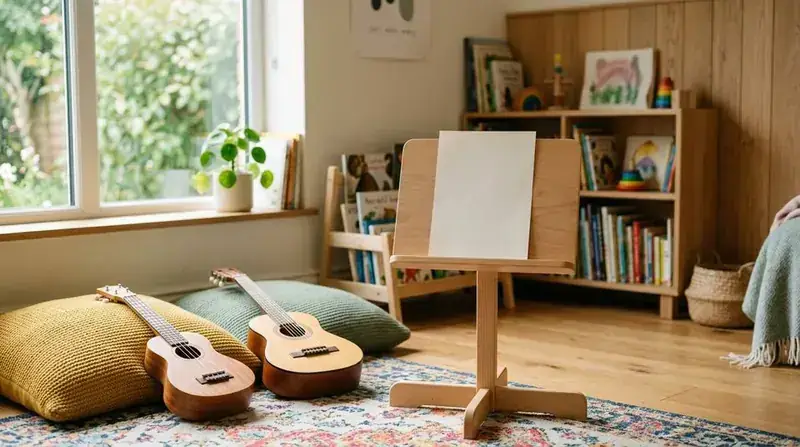
When the child is nine or older, can comfortably hold a three-quarter size instrument, and wants the sound of an electric or acoustic guitar specifically. When there is already a guitar in the house that an adult plays. When the child's taste is rock, metal or singer-songwriter material, none of which sounds like itself on a ukulele.
There is also a practical case: a child who wants lessons to be like the ones their friend takes, or who has chosen a school ensemble that needs a guitarist. Starting where the motivation already is almost always beats starting where the physics is easier.
The thing that matters more than the instrument
Whether the lessons are one-to-one. In a group, a teacher cannot hear that your child's third finger is collapsing on every chord change. They can in a private lesson, and that is the difference between a habit forming and a habit being fixed in week two.
The instrument in the house that gets picked up without a lesson. A child with a ukulele on a hook in the hallway will play more than a child with a guitar in a case in a cupboard, whatever the merits of the two instruments. Put it where the family already sits, and keep it in tune.
Second is the teacher's manner. A child who likes their teacher will practice to be ready for them; a child who is intimidated will practice to avoid being corrected. Neither instrument choice survives a bad pairing, and no instrument choice is wasted if the pairing is good.
Compare comfort after a short, relaxed trial
A child’s hands may find one instrument more comfortable at first, but early awkwardness is normal on both. Let the student try a few minutes with a correctly sized instrument and notice whether they remain curious. Avoid treating one brief trial as proof of long-term ability.
- Use an instrument size suited to the child.
- Try one simple chord or melody on each option.
- Ask which sound or song the child wants to revisit.
Two weeks is enough to see which instrument the child reaches for. Borrow or rent rather than buy, keep both sessions short and end them while the child is still enjoying it, and do not correct much during the trial — the question is fit, not technique.
At the end, ask which one they would take to a friend's house. That question gets a more honest answer than "which do you prefer", because it is about the instrument as an object in their life rather than as a lesson to be attended.
Check the music goal before choosing the instrument
The instrument should support the songs a child wants to play. A ukulele can be a smaller starting option, while guitar may match a specific musical interest from the beginning. Talk through the goal with a teacher before buying, and avoid presenting either path as the only correct choice.
- Name a song or style the child enjoys.
- Ask what the first few lessons might cover on each instrument.
- Choose a path the family can support consistently.
Related: guitar lessons and ukulele lessons.
Frequently asked questions
Is ukulele always the best first instrument for a child?
No. A ukulele can be comfortable for some young learners, but the child’s musical interest, instrument size, and family setup also matter. If a child is strongly drawn to guitar, discuss a correctly sized guitar with a teacher rather than dismissing that motivation.
Will ukulele skills transfer to guitar?
Some musical ideas, such as steady rhythm and chord changes, can help a student approach guitar. The instruments are not identical, so the child will still learn new finger spacing and setup. A teacher can explain which skills are likely to carry over for the student’s goals.
How can a parent compare the two instruments?
Let the child try a short, comfortable activity on each instrument and listen to music they would like to play. Check size and ease of holding before buying. A short conversation with a teacher can help the family compare options without treating one choice as permanent.
Next step
Once the child has a preferred musical direction, compare the current monthly plans on fees and use the free introductory session to discuss instrument size, songs, and a comfortable starting point.