
How often should you practice?
Shorter and more often beats longer and rarely, every single time. The answer on how long to practice, and why the right number changes with age.
By Dr Banerjee ·
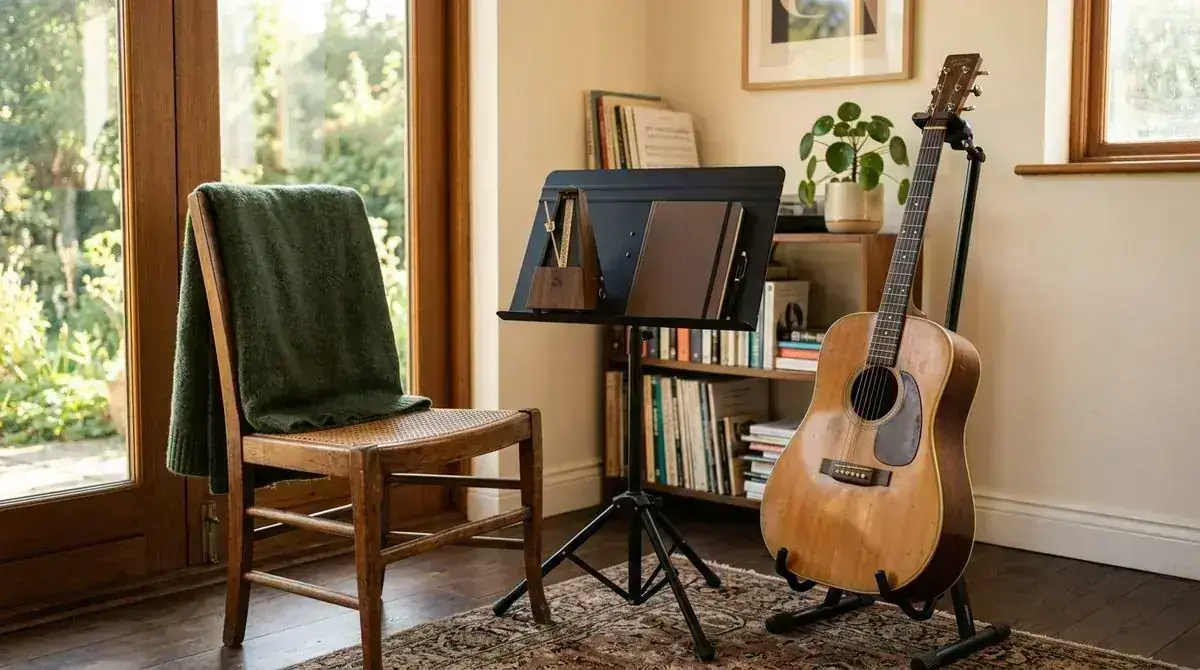
Frequency beats duration
Fifteen minutes a day beats two hours on a Sunday, every time. Musical progress is the laying down of physical patterns, and patterns are consolidated between sessions — during sleep, largely. You cannot cram it into one long weekend session.
The practical version for most adults is five days a week, fifteen to twenty-five minutes, with the instrument out of its case and in the room where you actually sit. Two of those days can be five minutes each — a single chord change, one phrase, nothing more — and they still count, because the point is the contact rather than the duration. What does not work is the pattern almost everyone starts with: one heroic Sunday session followed by six days of nothing, which produces sore fingers and very little else.
If you only have one free block a week, split it into two short sessions rather than one long one, even if they are on the same day. Twenty minutes in the morning and twenty in the evening beats a single forty-minute session, because the second session starts with a brain that has already consolidated the first. The same logic explains why a student who practices fifteen minutes a day for a month sounds better than one who practiced three hours on the first day of the month.
A working number for most adults
Twenty to thirty minutes, five or six days a week, alongside your lessons. That is sustainable alongside a job. The mistake adults make is setting a target that fits their enthusiasm in week one and their schedule not at all by week four.
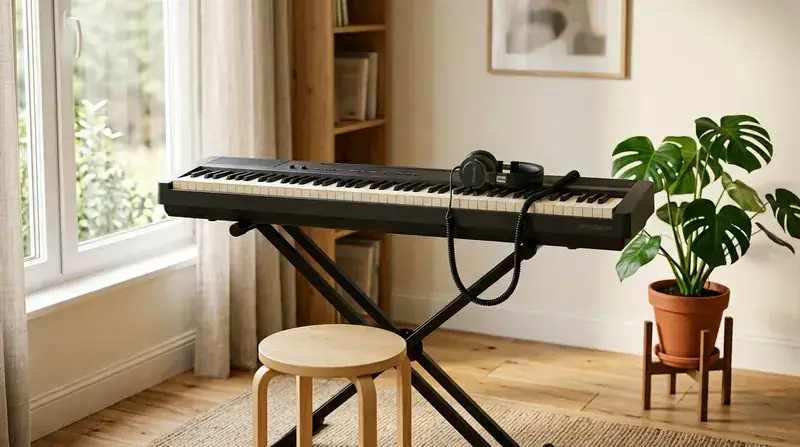
For children, shorter and more structured
Ten to fifteen minutes is plenty for a seven-year-old, and it should be at a predictable time rather than whenever it can be squeezed in. A child who practices ten minutes every day before dinner will outpace one who does an hour when reminded.
A seven-year-old's attention for a single task is roughly their age in minutes, which is why ten minutes is not a compromise but the correct length. Structure it the same way every time so it becomes a routine rather than a negotiation: two minutes of a warm-up they already know, five minutes on the one thing being learned, three minutes playing something they enjoy. A parent sitting nearby without correcting is worth more than a parent supervising; the teacher's job is the correction, and duplicating it at home makes practice feel like being watched.
The signal to lengthen the session is not age, it is whether the child returns to the instrument unprompted. Once they start picking it up between practices, add five minutes and a second piece. Before that, adding time to an unwilling student only teaches them that music is a chore, which is the one outcome worth avoiding at this age.
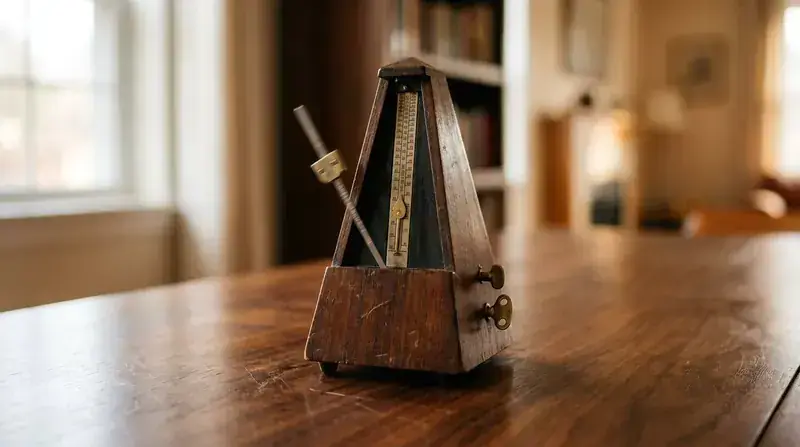
What to do in those minutes
Not scales for twenty minutes. One specific thing, chosen at the end of the previous lesson, done slowly and correctly. Slow practice is the whole trick. Playing something fast and sloppy teaches your hands the sloppy version.
A workable fifteen-minute shape: three minutes on the change or passage that is currently slowest, played slowly enough to be correct; seven minutes on the piece you are learning, played end to end without stopping to fix things; five minutes on something you can already play, which is what keeps the habit alive. The order matters less than the rule that the hardest thing goes first, while your attention is fresh.
Keep a pencil and the same notebook next to the instrument. At the end of each session, write one line: what was slow, and what you will start with tomorrow. That single line removes the ten minutes of deciding what to practice that otherwise eats the session, and it makes the first minute of the next session productive. Students who do this progress noticeably faster than students who practice the same length of time without it.
The week you do not practice at all
It will happen. Do not treat it as a reason to stop — the students who quit are the ones who decide that a missed week means they have failed. One missed week is one missed week. Tell your teacher, pick up the next one.
Adjust the routine when a week gets unusually busy
A missed day does not erase progress. During exams, travel, or a demanding work week, switch to a shorter task that keeps the instrument familiar, then return to the usual routine when time opens up. A plan that can bend is more likely to last than an all-or-nothing target.
Drop the length, not the habit. A five-minute session on a chaotic day keeps the routine intact; skipping the day entirely is what breaks it, because the next skip is easier than the first. Decide in advance what your minimum session looks like — one scale, one chord change, one phrase of the current piece — so the decision is already made when you are tired.
When the busy week ends, do not try to make up the lost time in a single long session. Return to the normal schedule on the first free day, at the normal length, and expect the first two sessions to feel slightly worse than before the break. That dip is normal, it resolves within a few days, and it is why a two-week pause feels catastrophic to a student and barely registers to a teacher.
- Choose one short passage or listening task for busy days.
- Avoid doubling the next practice session to make up time.
- Tell the teacher when a schedule change affects the lesson goal.
Track one useful signal instead of counting every minute
A practice log can note what changed, not just how long the student sat down. Mark a passage that became smoother, a question that remains, or a day when focus was low. This gives the next lesson concrete information and avoids turning practice into a competition.
A time log tells you that you sat with the instrument. A signal tells you whether anything changed. Pick one per month: the tempo at which you can play a section cleanly, the number of chord changes in a minute, the bars you can play from memory, or the point in a piece where you stop. Note it on the first and last day of the month, and nothing in between.
That measurement does two things. It gives you proof of progress during the weeks when nothing feels better — which is most weeks — and it tells you when a piece is genuinely stuck rather than simply slow. If the signal has not moved in three weeks of regular practice, the problem is almost never effort; it is usually that the passage is being practiced too fast, or that it needs to be broken into a smaller piece. That is the point at which a lesson is worth more than another week of drilling.
- Write one sentence after practice about what felt easier.
- Mark one question for the teacher.
- Review the notes weekly and adjust the next small goal.
Related: what you could be practicing, and the questions students ask.
Frequently asked questions
How long should a beginner practice each day?
There is no single amount for every student or instrument. Start with a manageable task from the lesson and a schedule the student can repeat. Ask the teacher for a suitable target, then adjust it if the routine causes frustration or does not fit the household’s week.
Is it better to practice daily or in longer sessions?
Frequent, focused contact with an instrument can help a student remember what they are learning, but the routine should be realistic. A longer session may work for some goals. Discuss the student’s age, instrument, and current assignment with the teacher before setting expectations.
What should I do after missing several practice days?
Resume with a small, familiar task rather than trying to make up every missed minute. Note what feels rusty and bring that information to the next lesson. A flexible routine is easier to maintain than doubling the workload after a busy week.
Next step
A teacher can help set a target that fits the student’s week. Review the available monthly plans on the fees page or use the free introductory session to discuss practice goals and lesson rhythm.