
Online Guitar Lessons for Kids in the USA: A Parent Guide
A parent’s checklist for guitar size, camera placement and a child-friendly practice plan before starting online lessons.
By Dr Banerjee ·
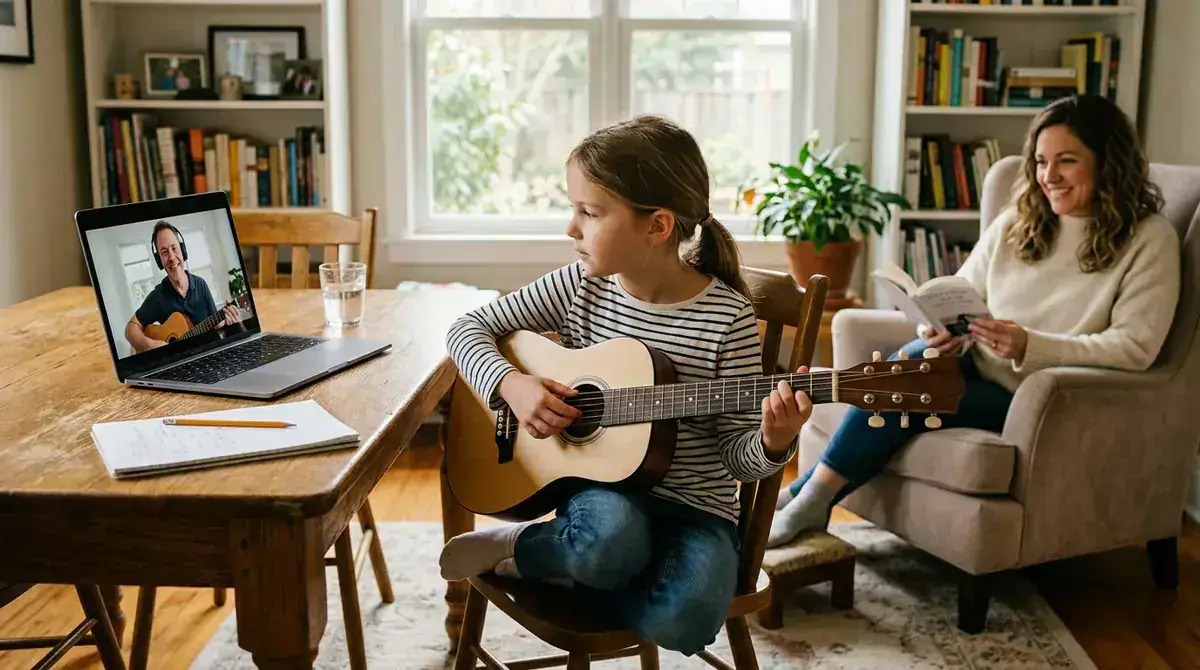
Start with a guitar the child can hold comfortably
Online guitar lessons for kids in the USA work better when a child can sit comfortably and reach the strings without hunching or stretching. A full-size guitar is not automatically the right choice for every child. If you already own an instrument, show it during the introductory conversation; if you do not, ask what size range to compare before spending money.

A footstool or stable chair can support posture, but avoid stacking loose objects under a child or instrument. The teacher can look at the guitar’s scale and the student’s reach on camera and suggest what to check at a local shop.
Sizing is measured, not guessed. A three-quarter guitar with nylon strings suits most nine- and ten-year-olds; a half-size suits seven- and eight-year-olds; a full-size instrument is usually right from about twelve, and even then only if the child can reach the first fret with a relaxed wrist. Ask the shop to check the string height while you are there, because a child fighting a high action will lose to it.
Sit the child down with the instrument before the first paid lesson and watch two things: whether the right hand can strum over the soundhole without the arm locking, and whether the left hand can press the first fret without the thumb clamping. If either is a struggle, the guitar is too big, and no amount of lesson time will fix it.
Frame the fretting and picking hands
A camera angle that shows the guitar neck and the picking hand makes remote feedback more specific. The device can sit slightly to one side rather than directly in front of the student. Good light helps the teacher see finger placement; the room does not need to look like a studio.
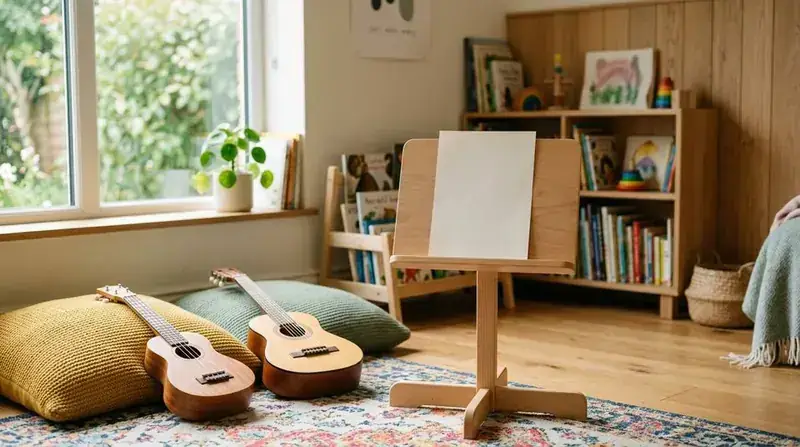
Keep a tuner, picks if used, and a pencil close by. For the first lesson, the teacher can check tuning and show how to hold the instrument. A parent can help with setup while allowing the child to answer questions and try the movements independently.
The camera has to show both hands and the neck, which usually means placing it slightly to the player's right rather than straight ahead. A tablet propped on a music stand at chest height works better than a phone on a desk, because a phone at desk height shows the child's face and nothing else.
At the start of each session, check the strap or the footstool so the neck is not falling away from the fretting hand. Most of what looks like poor technique in a nine-year-old is actually the instrument moving, and it is fixed in ten seconds once the child is sitting properly.
Choose practice goals that fit a child’s week
Young students benefit from one or two clearly described tasks rather than a long list. A short chord change or rhythm pattern can be repeated slowly, then played in a song the child recognizes. Parents can encourage consistency without turning every practice into a test.
Ask how lesson notes are shared and what a reasonable home routine might look like for your child. The free one-to-one introductory session helps set expectations before you choose a monthly option. Current prices and class counts are on the fees page.
Three short sessions a week of ten minutes each, on the same days each week, will move faster than one thirty-minute session on a Saturday. The goal for each session should be one thing: the change between two chords, the first four notes of a riff, the strumming pattern on one line. Write it on a card and leave the card on the music stand.
If the child is preparing for a school performance, work backwards from the date and decide which week the piece has to be finished. Children are far more willing to practice when they can see the date the work is for, and far less willing to practice a task that has no visible end.
Set the camera to show the fretting and picking hands
A useful view includes the child’s guitar neck and the hand making the sound. A parent can adjust the camera before class, then move out of the way unless help is needed. Avoid balancing a phone where it can fall onto the instrument.
- Place the guitar comfortably before the call begins.
- Use a small stand or a stable stack of books for the device.
- Check that the room light does not reflect off the screen or hide the fretboard.
Test the angle before the lesson by playing a chord and asking whether the teacher can see both the fingers and the pick. If the answer takes more than a second, move the camera. Good light on the hands matters more than a good webcam: a lamp behind the camera, not behind the child, removes the shadow that hides the fretboard.
Keep the cables and the power supply out of the shot and inside reach. A child whose laptop battery dies mid-lesson loses the session; a child whose cable has to be plugged in mid-song loses the thread of what they were playing.
Choose a song the child already wants to play
Interest helps a young guitarist return to a new chord or rhythm. Start with a short, age-appropriate musical goal and let the teacher break it into small actions. Avoid switching songs every few minutes; a familiar chorus can give practice a clear finish.
- Ask the child to name one song or style they enjoy.
- Practice one chord change slowly before adding the full rhythm.
- Celebrate steady effort and relaxed hands rather than speed.
Pick something with four chords or fewer and a riff the child can hear clearly in their head. The first song does not have to be a guitar song — many children learn a pop or film melody on single notes before they learn a strumming pattern, and arrive at chords with a better sense of pitch because of it.
Avoid songs with long stretches of the same chord or rapid position shifts for the first month. The aim is a complete piece in six weeks, played to a family member, because a finished song is what makes the second song possible.
Check string height and tuning before a child practices
A guitar that is hard to press can make a young learner blame their fingers. Before practice, check that the instrument is in tune and ask a teacher or qualified shop to look at string height if notes feel unusually difficult. Avoid tightening parts or changing the setup without guidance.
- Tune the guitar with an adult or a reliable tuner.
- Notice whether the child can press a string without excessive force.
- Ask the teacher what to check before replacing strings or adjusting the instrument.
A cheap clip-on tuner and a thirty-second check at the start of each session is enough. Ask the teacher to look at the action at the third lesson, once the child's hand position has settled, and to say plainly whether the instrument needs a setup. A buzzing string or a fret that chokes a note will be read by the child as their own failure, every time.
Keep the guitar in its case or on a stand in a room that does not swing in temperature. Nylon strings settle within a week or two of being fitted; steel strings take longer and need changing when they sound dull rather than when they break.
Build a rhythm with a spoken count-in
A child may know the chord shape but lose the beat while changing positions. Count aloud at a comfortable pace, then strum only on the first beat before adding more movement. The aim is a steady pattern that can be repeated, not a fast song played through mistakes.
- Say the beat aloud before adding strums.
- Change between two chords slowly and keep the count moving.
- Add the song only after the pattern feels steady.
Related: Guitar lessons and Lessons for children.
Frequently asked questions
What age can a child start online guitar lessons?
The site’s lessons are for children age seven and up. Readiness also depends on comfort holding the instrument, interest in music, and the family’s routine; discuss those details during the introductory session. Use a familiar chair and check the camera view before the child begins playing.
Does a child need an acoustic or electric guitar?
Either may work, depending on the music the child wants to play and the instrument already at home. Check that the guitar is appropriately sized and easy to press before buying something new. The teacher can suggest a suitable size after seeing how the child holds the guitar.
How can a parent support guitar practice?
Help the child find a regular, short practice window and make sure the instrument is ready to play. Ask what one skill to repeat, then let the child practice independently and bring questions back to the teacher. Keep goals small enough that the child can repeat them without a parent correcting every note.
Ready to explore lessons?
Compare the monthly fees and plans or learn what happens in the free introductory session.